Aug
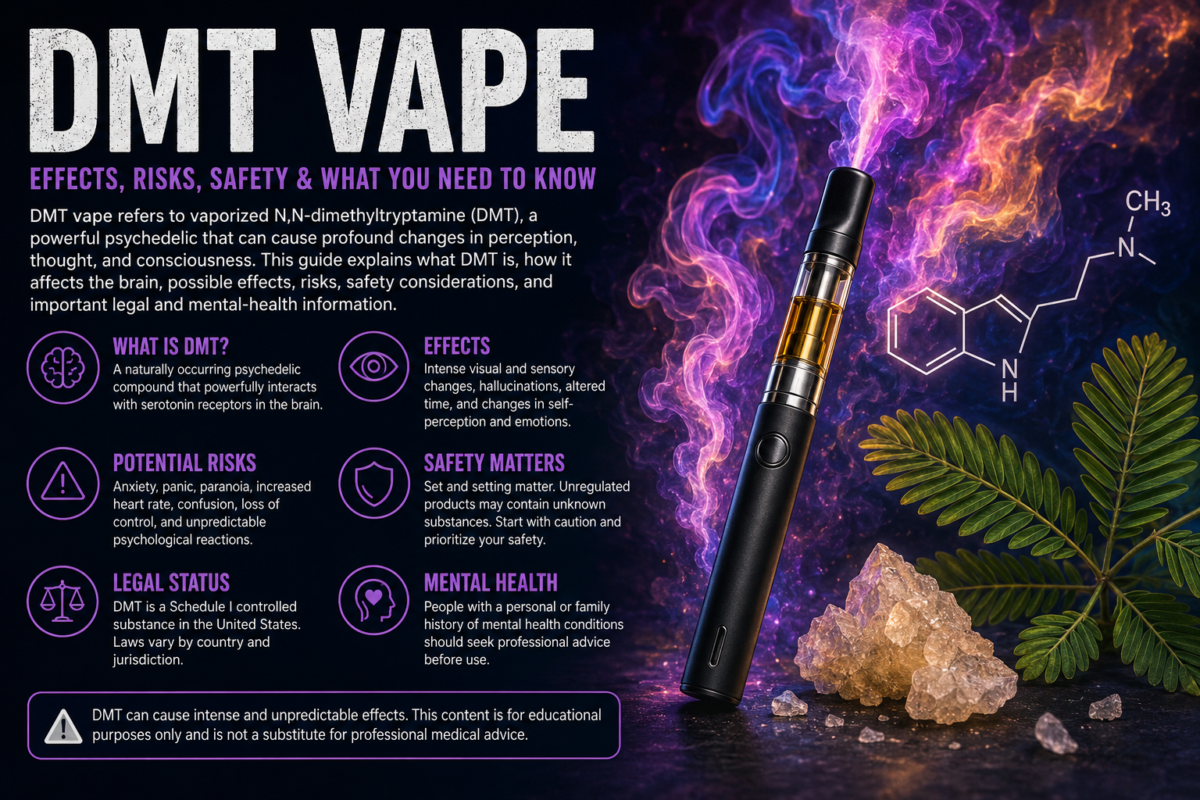
DMT vape is a term commonly used to describe a device or vaping method associated with vaporized N,N-dimethyltryptamine (DMT), a powerful psychedelic substance. DMT can produce profound changes in perception, mood, thinking, and the sense of time and reality. Because the effects can be intense and unpredictable, understanding the substance and its potential risks is important.
DMT belongs to a group of substances known as classic psychedelics. It acts primarily through serotonin systems in the brain and can produce hallucinations and major alterations in perception. For a deeper explanation of the substance itself, see our guide to how DMT works, which explores serotonin receptors, perception, and the brain.
When people search for DMT vape, they may be referring to a vaping device, a cartridge, or vaporized DMT more generally. However, products sold outside regulated medical or pharmaceutical systems can be difficult to verify. The actual contents, concentration, contaminants, and other ingredients may be unknown, creating additional risks.
This is also why it is useful to distinguish a vape device from the substance itself. Our existing DMT pen guide examines the device concept, its components, product-label uncertainty, and safety concerns.
This guide takes an educational and safety-focused approach. It explains what vaporized DMT is, how it can affect perception, possible short-term effects, potential risks, duration, psychological considerations, dependence, legal issues, and situations in which medical attention may be necessary.
Table of Contents
- What Is a DMT Vape?
- What Is DMT?
- How Vaporized DMT Affects the Brain
- DMT Vape Effects
- Changes in Perception
- What a DMT Experience May Feel Like
- How Long DMT Effects Can Last
- Why Unregulated DMT Vape Products Can Be Unpredictable
What Is a DMT Vape?
A DMT vape generally refers to a method of delivering DMT in vapor form rather than swallowing it or using another route of administration. In informal markets, the term may describe different types of devices or products, so the name alone does not establish exactly what substance or concentration is present.
Vaporized DMT is associated with a rapid onset of psychedelic effects. Compared with some other ways of encountering psychedelic substances, inhaled DMT can produce a particularly sudden change in perception and consciousness.
Because commercially or informally produced vape products may not undergo consistent quality control, a label claiming to contain DMT should not automatically be treated as proof of its contents. Unknown substances or contaminants can introduce risks that are separate from the effects of DMT itself.
For this reason, discussions about a DMT vape should distinguish between the pharmacological effects of DMT and the additional uncertainty associated with an unregulated product.
What Is DMT?
DMT, or N,N-dimethyltryptamine, is a potent psychedelic compound. It can produce significant changes in sensory perception, thought patterns, emotions, and awareness of the surrounding environment.
DMT is chemically related to serotonin and other tryptamine compounds. Its psychedelic effects are associated with activity at serotonin receptors, particularly the serotonin 2A receptor system.
According to the National Institute on Drug Abuse, hallucinogens such as DMT can alter a person’s perceptions, thoughts, and feelings. Experiences may include hallucinations and changes in the perception of time, space, and one’s own body.
DMT is sometimes described as a naturally occurring psychedelic because related compounds occur in a variety of plants. However, naturally occurring does not mean that a substance is automatically harmless or predictable.
How Vaporized DMT Affects the Brain
DMT interacts with several serotonin receptors in the brain and can substantially alter normal patterns of perception and cognition.
Serotonin is involved in numerous neurological processes, including mood, perception, attention, and sensory processing. By interacting with serotonin receptor systems, psychedelics such as DMT can temporarily change how the brain processes internal and external information.
The result can be an unusually intense alteration of visual perception, thoughts, emotions, and the person’s sense of self or surroundings.
Researchers continue to study exactly how these changes emerge from interactions between different brain networks. Psychedelic experiences are complex and cannot be reduced to a single neurotransmitter or one simple mechanism.
For additional background, read our detailed guide on DMT effects, which covers reported psychological and physical effects in greater depth.
DMT Vape Effects
The effects associated with vaporized DMT can be extremely intense. A person may experience rapidly changing visual imagery, altered perceptions of sound and space, unusual thought patterns, changes in emotional intensity, and a distorted sense of time.
Some people describe psychedelic experiences as fascinating or meaningful, while others may experience fear, confusion, panic, or overwhelming sensory changes.
Potential acute effects can include:
- Intense visual or sensory changes
- Hallucinations
- Altered perception of time
- Changes in the perception of one’s body
- Rapidly changing thoughts
- Strong emotional responses
- Confusion or disorientation
- Increased heart rate
- Agitation or anxiety
These effects can vary substantially between people and circumstances. Our dedicated DMT effects guide provides additional context on reported physical sensations, psychological experiences, and duration.
Changes in Perception
One of the defining characteristics of DMT is its ability to dramatically alter perception.
Visual experiences can involve patterns, shapes, movement, intensified colors, or imagery that appears entirely different from the person’s ordinary visual environment. Auditory perception and the sense of space can also change.
Some individuals report a strong alteration in their sense of self or surroundings. These changes can make ordinary environments feel unfamiliar or unreal.
Such experiences can be difficult to predict. A person’s expectations, emotional state, environment, previous psychedelic experiences, and other factors may influence how the experience is interpreted.
What a DMT Experience May Feel Like
There is no single experience that everyone will have with DMT. Some people report intense perceptual changes and unusual imagery, while others describe the experience as confusing, frightening, emotionally overwhelming, or difficult to understand.
The intensity of psychedelic experiences can make it difficult for a person to accurately judge their surroundings while the effects are occurring. This can become a safety concern if someone is near traffic, heights, water, machinery, or other hazards.
Psychological reactions can also vary. A person who feels calm before exposure may still experience sudden anxiety or panic once perception changes dramatically.
These differences are one reason that claims portraying DMT experiences as universally positive, spiritual, safe, or predictable should be treated cautiously.
How Long DMT Effects Can Last
Vaporized DMT is generally associated with a relatively rapid onset and a comparatively short period of prominent psychedelic effects compared with some longer-lasting psychedelics. However, the exact timeline can vary depending on the substance, product composition, individual physiology, and other factors.
A short duration does not necessarily mean a low-risk experience. Rapid changes in consciousness can be intense, and residual anxiety, confusion, or other after-effects may continue after the most obvious psychedelic effects have diminished.
For a broader discussion of DMT duration across different formulations and contexts, see our existing guide on how long DMT lasts.
Why Unregulated DMT Vape Products Can Be Unpredictable
A major concern with informal DMT vape products is uncertainty about what is actually inside the device.
Without reliable laboratory testing and regulated manufacturing, consumers may not know the concentration of the active substance, whether other chemicals are present, or whether contaminants were introduced during production.
This creates two separate categories of risk: the inherent effects of DMT itself and the additional risks associated with an unknown or incorrectly labeled product.
It is therefore important not to assume that every product marketed as a DMT vape contains the same substance or produces the same effects.
Potential Risks of DMT Vape Use
Although a DMT vape may be associated with a relatively brief period of intense psychedelic effects, a short duration does not mean the experience is risk-free. DMT can produce profound changes in perception and awareness, and those changes can sometimes become frightening, confusing, or overwhelming.
Reported DMT effects can vary considerably between people. Our DMT effects guide provides a broader educational overview of reported psychological and physical effects, including changes in perception, emotional intensity, and physical sensations.
Another concern is the uncertainty surrounding products obtained outside regulated systems. A product marketed as containing DMT may have an uncertain composition or concentration, making it difficult to know exactly what a person has been exposed to.
The risks therefore involve both the pharmacological effects of DMT and the uncertainty associated with an unregulated product.
Physical Effects of DMT
DMT can produce physical effects alongside its psychological and perceptual effects. Reported effects may include increased heart rate, changes in blood pressure, nausea, dizziness, palpitations, headache, tiredness, and impaired coordination.
A person experiencing intense perceptual changes may also have difficulty recognizing physical hazards around them. This can increase the possibility of accidental injury, particularly when judgment and coordination are temporarily affected.
Physical symptoms can become more concerning when combined with severe anxiety, pre-existing medical conditions, or other substances.
Psychological Effects of DMT
The psychological effects of a DMT vape can be particularly intense. DMT can dramatically alter perception, thought patterns, emotional responses, and a person’s sense of their surroundings or body.
Some experiences may be interpreted as fascinating or meaningful. Others can involve fear, anxiety, panic, confusion, or a profound sense of disorientation.
There is no reliable way to guarantee that a particular psychedelic experience will be positive. Individual expectations, emotional state, surroundings, previous experiences, and the actual contents of a product can all influence the experience.
DMT, Panic, and Loss of Control
A sudden alteration in consciousness can be difficult to manage, particularly when a person is not expecting the intensity of the experience.
During a frightening psychedelic experience, a person may temporarily struggle to understand what is happening around them. They may become highly anxious, confused, or convinced that something is seriously wrong.
The surrounding environment can matter as well. Being near traffic, water, heights, machinery, or other hazards while perception and judgment are significantly altered can increase the possibility of accidental injury.
This is one reason psychedelic effects should not be considered harmless simply because they may wear off relatively quickly.
DMT and Mental Health
The relationship between psychedelics and mental health is complex. Research into psychedelic-assisted therapies is ongoing, but controlled research settings are very different from unpredictable exposure to an unregulated product.
People with a personal or family history of certain psychiatric conditions may require particular caution around substances capable of producing intense alterations in perception and reality.
Anyone who experiences persistent hallucinations, severe paranoia, prolonged confusion, major behavioral changes, or other unusual psychological symptoms after drug exposure should seek appropriate medical evaluation.
For broader educational context about psychedelics and how they can affect perception and the brain, see our beginner guide to psychedelics.
DMT and Psychotic Symptoms
Hallucinogens can produce experiences that resemble some features of psychosis while the substance is active. Drug-induced perceptual changes and an underlying psychiatric disorder, however, are not automatically the same thing.
A person experiencing hallucinations during an acute psychedelic state should not automatically conclude that they have schizophrenia or another psychotic disorder.
Persistent psychotic symptoms after the expected drug effects have ended warrant professional assessment, particularly when they involve severe paranoia, hallucinations, disorganized thinking, or an inability to function normally.
DMT and Cardiovascular Effects
DMT can produce physiological stimulation, including changes in heart rate and blood pressure. For someone with an underlying cardiovascular condition, sudden physiological changes may be more concerning than they would be for a healthy person.
Anyone with significant heart or blood-pressure problems should discuss concerns about psychedelic drug exposure with a qualified healthcare professional, particularly if concerning physical symptoms occur.
DMT and Other Substances
Combining DMT with other psychoactive substances can make the overall experience more difficult to predict. Different substances can affect heart rate, blood pressure, consciousness, mood, and perception in different ways.
Because interactions can depend on the specific substances involved, their concentrations, and individual health factors, there is no reliable way to assume that combining DMT with another drug will produce a predictable outcome.
Unregulated products create an additional problem because a person may not know precisely what compounds are present.
Our existing educational material on DMT effects provides additional context about the range of reported effects that can occur.
DMT and MAO-Inhibiting Substances
DMT can also occur in traditional preparations that contain other plant compounds capable of affecting monoamine oxidase. This is an important pharmacological distinction from DMT alone.
Monoamine oxidase plays a role in metabolizing several neurotransmitters and drugs. Substances that inhibit this enzyme can therefore alter the effects or risks associated with other compounds.
Because potentially serious interactions can occur with some medications and substances, people should not assume that information about one form of DMT automatically applies to every preparation or combination.
Can DMT Be Addictive?
The addictive potential of DMT remains an area requiring further research. DMT does not have the same established physical-dependence profile as substances such as opioids, alcohol, or benzodiazepines.
That uncertainty should not be interpreted as proof that repeated exposure is completely harmless. A person’s relationship with a substance can involve psychological, behavioral, or social problems even when the pharmacological potential for physical dependence differs from that of other drugs.
If someone feels unable to control their substance use, continues using despite serious consequences, or experiences significant problems related to drug use, professional support can be appropriate.
Why DMT Vape Products Can Be Difficult to Evaluate
One of the most important considerations when discussing a DMT vape is product uncertainty.
Unlike regulated pharmaceutical products, illicit or informally produced vape products may not have reliable manufacturing standards, independent quality testing, or accurate labeling.
This means a person may not know the exact concentration of DMT, whether other psychoactive substances are present, or whether contaminants have been introduced.
Your existing DMT pen guide also discusses why device appearance, branding, and labeling cannot by themselves establish what a product contains.
Consequently, two products marketed under the same name could potentially have very different compositions and effects.
Is DMT Legal?
The legal status of DMT varies substantially around the world. In the United States, DMT is federally classified as a Schedule I controlled substance. Laws outside the United States can differ considerably.
Legal rules can also change, particularly around research, religious practices, and specific plant preparations. Anyone researching the legal status of DMT should therefore check the current laws applicable to their own jurisdiction rather than relying on information from another country.
When DMT Exposure May Require Medical Attention
Most discussions about psychedelic effects focus on perception, but serious symptoms should never be dismissed as simply part of a “trip.”
Urgent medical evaluation may be appropriate when someone develops severe or persistent difficulty breathing, loses consciousness, experiences a seizure, has severe chest pain, becomes dangerously agitated, or remains severely confused or psychotic after the expected effects should have subsided.
Emergency evaluation is also appropriate when the substance involved is unknown or when DMT may have been combined with other drugs.
After-Effects and Recovery
Once the main psychedelic effects have diminished, some people may continue to feel emotionally unsettled, tired, confused, or unusually sensitive to their surroundings.
A lingering psychological reaction does not necessarily mean that permanent harm has occurred, but persistent or worsening symptoms deserve professional assessment.
Particularly concerning symptoms include continuing hallucinations, severe paranoia, prolonged disorientation, suicidal thoughts, or an inability to return to normal daily functioning.
Key Takeaways
Severe physical symptoms, persistent psychosis, seizures, loss of consciousness, or dangerous behavior require urgent medical attention.
A DMT vape can produce rapid and profound changes in perception and consciousness.
DMT experiences can be unpredictable and may involve either positive or highly distressing psychological reactions.
Physical effects can include changes in heart rate, blood pressure, nausea, dizziness, and coordination.
Unregulated vape products may create additional uncertainty about composition and concentration.
Psychotic-like experiences during intoxication do not automatically mean a person has schizophrenia.
The addictive potential of DMT remains an area requiring further research.
DMT laws vary by jurisdiction and should be checked locally.
Potential Risks of DMT Vape Use
Although a DMT vape may be associated with a relatively brief period of intense psychedelic effects, a short duration does not mean the experience is risk-free. DMT can produce profound changes in perception and awareness, and those changes can sometimes become frightening, confusing, or overwhelming.
Reported DMT effects can vary considerably between people. Our DMT effects guide provides a broader educational overview of reported psychological and physical effects, including changes in perception, emotional intensity, and physical sensations.
Another concern is the uncertainty surrounding products obtained outside regulated systems. A product marketed as containing DMT may have an uncertain composition or concentration, making it difficult to know exactly what a person has been exposed to.
The risks therefore involve both the pharmacological effects of DMT and the uncertainty associated with an unregulated product.
Physical Effects of DMT
DMT can produce physical effects alongside its psychological and perceptual effects. Reported effects may include increased heart rate, changes in blood pressure, nausea, dizziness, palpitations, headache, tiredness, and impaired coordination.
A person experiencing intense perceptual changes may also have difficulty recognizing physical hazards around them. This can increase the possibility of accidental injury, particularly when judgment and coordination are temporarily affected.
Physical symptoms can become more concerning when combined with severe anxiety, pre-existing medical conditions, or other substances.
Psychological Effects of DMT
The psychological effects of a DMT vape can be particularly intense. DMT can dramatically alter perception, thought patterns, emotional responses, and a person’s sense of their surroundings or body.
Some experiences may be interpreted as fascinating or meaningful. Others can involve fear, anxiety, panic, confusion, or a profound sense of disorientation.
There is no reliable way to guarantee that a particular psychedelic experience will be positive. Individual expectations, emotional state, surroundings, previous experiences, and the actual contents of a product can all influence the experience.
DMT, Panic, and Loss of Control
A sudden alteration in consciousness can be difficult to manage, particularly when a person is not expecting the intensity of the experience.
During a frightening psychedelic experience, a person may temporarily struggle to understand what is happening around them. They may become highly anxious, confused, or convinced that something is seriously wrong.
The surrounding environment can matter as well. Being near traffic, water, heights, machinery, or other hazards while perception and judgment are significantly altered can increase the possibility of accidental injury.
This is one reason psychedelic effects should not be considered harmless simply because they may wear off relatively quickly.
DMT and Mental Health
The relationship between psychedelics and mental health is complex. Research into psychedelic-assisted therapies is ongoing, but controlled research settings are very different from unpredictable exposure to an unregulated product.
People with a personal or family history of certain psychiatric conditions may require particular caution around substances capable of producing intense alterations in perception and reality.
Anyone who experiences persistent hallucinations, severe paranoia, prolonged confusion, major behavioral changes, or other unusual psychological symptoms after drug exposure should seek appropriate medical evaluation.
For broader educational context about psychedelics and how they can affect perception and the brain, see our beginner guide to psychedelics.
DMT and Psychotic Symptoms
Hallucinogens can produce experiences that resemble some features of psychosis while the substance is active. Drug-induced perceptual changes and an underlying psychiatric disorder, however, are not automatically the same thing.
A person experiencing hallucinations during an acute psychedelic state should not automatically conclude that they have schizophrenia or another psychotic disorder.
Persistent psychotic symptoms after the expected drug effects have ended warrant professional assessment, particularly when they involve severe paranoia, hallucinations, disorganized thinking, or an inability to function normally.
DMT and Cardiovascular Effects
DMT can produce physiological stimulation, including changes in heart rate and blood pressure. For someone with an underlying cardiovascular condition, sudden physiological changes may be more concerning than they would be for a healthy person.
Anyone with significant heart or blood-pressure problems should discuss concerns about psychedelic drug exposure with a qualified healthcare professional, particularly if concerning physical symptoms occur.
DMT and Other Substances
Combining DMT with other psychoactive substances can make the overall experience more difficult to predict. Different substances can affect heart rate, blood pressure, consciousness, mood, and perception in different ways.
Because interactions can depend on the specific substances involved, their concentrations, and individual health factors, there is no reliable way to assume that combining DMT with another drug will produce a predictable outcome.
Unregulated products create an additional problem because a person may not know precisely what compounds are present.
Our existing educational material on DMT effects provides additional context about the range of reported effects that can occur.
DMT and MAO-Inhibiting Substances
DMT can also occur in traditional preparations that contain other plant compounds capable of affecting monoamine oxidase. This is an important pharmacological distinction from DMT alone.
Monoamine oxidase plays a role in metabolizing several neurotransmitters and drugs. Substances that inhibit this enzyme can therefore alter the effects or risks associated with other compounds.
Because potentially serious interactions can occur with some medications and substances, people should not assume that information about one form of DMT automatically applies to every preparation or combination.
Can DMT Be Addictive?
The addictive potential of DMT remains an area requiring further research. DMT does not have the same established physical-dependence profile as substances such as opioids, alcohol, or benzodiazepines.
That uncertainty should not be interpreted as proof that repeated exposure is completely harmless. A person’s relationship with a substance can involve psychological, behavioral, or social problems even when the pharmacological potential for physical dependence differs from that of other drugs.
If someone feels unable to control their substance use, continues using despite serious consequences, or experiences significant problems related to drug use, professional support can be appropriate.
Why DMT Vape Products Can Be Difficult to Evaluate
One of the most important considerations when discussing a DMT vape is product uncertainty.
Unlike regulated pharmaceutical products, illicit or informally produced vape products may not have reliable manufacturing standards, independent quality testing, or accurate labeling.
This means a person may not know the exact concentration of DMT, whether other psychoactive substances are present, or whether contaminants have been introduced.
Your existing DMT pen guide also discusses why device appearance, branding, and labeling cannot by themselves establish what a product contains.
Consequently, two products marketed under the same name could potentially have very different compositions and effects.
Is DMT Legal?
The legal status of DMT varies substantially around the world. In the United States, DMT is federally classified as a Schedule I controlled substance. Laws outside the United States can differ considerably.
Legal rules can also change, particularly around research, religious practices, and specific plant preparations. Anyone researching the legal status of DMT should therefore check the current laws applicable to their own jurisdiction rather than relying on information from another country.
When DMT Exposure May Require Medical Attention
Most discussions about psychedelic effects focus on perception, but serious symptoms should never be dismissed as simply part of a “trip.”
Urgent medical evaluation may be appropriate when someone develops severe or persistent difficulty breathing, loses consciousness, experiences a seizure, has severe chest pain, becomes dangerously agitated, or remains severely confused or psychotic after the expected effects should have subsided.
Emergency evaluation is also appropriate when the substance involved is unknown or when DMT may have been combined with other drugs.
After-Effects and Recovery
Once the main psychedelic effects have diminished, some people may continue to feel emotionally unsettled, tired, confused, or unusually sensitive to their surroundings.
A lingering psychological reaction does not necessarily mean that permanent harm has occurred, but persistent or worsening symptoms deserve professional assessment.
Particularly concerning symptoms include continuing hallucinations, severe paranoia, prolonged disorientation, suicidal thoughts, or an inability to return to normal daily functioning.
Key Takeaways
Severe physical symptoms, persistent psychosis, seizures, loss of consciousness, or dangerous behavior require urgent medical attention.
A DMT vape can produce rapid and profound changes in perception and consciousness.
DMT experiences can be unpredictable and may involve either positive or highly distressing psychological reactions.
Physical effects can include changes in heart rate, blood pressure, nausea, dizziness, and coordination.
Unregulated vape products may create additional uncertainty about composition and concentration.
Psychotic-like experiences during intoxication do not automatically mean a person has schizophrenia.
The addictive potential of DMT remains an area requiring further research.
DMT laws vary by jurisdiction and should be checked locally.
Frequently Asked Questions About DMT Vape
What is a DMT vape?
A DMT vape generally refers to a device or product associated with vaporized N,N-dimethyltryptamine (DMT), a powerful psychedelic substance. The term can describe different products, and products sold outside regulated systems may have uncertain contents or concentrations.
For additional information about the device terminology, see our educational DMT pen guide.
What is DMT?
DMT, or N,N-dimethyltryptamine, is a powerful psychedelic compound that can cause major changes in perception, thought, emotion, and awareness. It belongs to the tryptamine family of psychedelic substances and interacts with serotonin receptor systems in the brain.
Our article explaining how DMT works provides more detail about serotonin receptors, perception, and brain activity.
What effects can DMT produce?
DMT can produce intense visual and sensory changes, hallucinations, altered perception of time and space, rapidly changing thoughts, emotional changes, and a changed sense of self or surroundings. Physical effects can also occur, including increased heart rate and agitation.
See our dedicated guide to DMT effects for a broader educational overview.
How long do DMT vape effects last?
Vaporized DMT is generally associated with a rapid onset and a comparatively short period of prominent psychedelic effects. The exact experience varies between individuals and can be affected by the substance, product composition, and other factors.
Our guide on how long DMT lasts discusses duration in greater detail.
Is DMT addictive?
The addictive potential of DMT is not fully established. DMT does not have the same well-established dependence profile as substances such as opioids, alcohol, or benzodiazepines. However, problematic substance use can still occur, and repeated use despite significant negative consequences may warrant professional support.
Can DMT cause hallucinations?
Yes. Hallucinations and major changes in sensory perception are among the characteristic effects associated with DMT and other classic psychedelics. These experiences can be pleasant, confusing, frightening, or overwhelming depending on the individual and circumstances.
Can DMT cause paranoia?
DMT can produce intense psychological reactions, including fear, anxiety, confusion, and experiences that may resemble paranoia. Severe or persistent paranoia after the expected effects have ended should be evaluated by a healthcare professional.
Can DMT affect heart rate?
Yes. Increased heart rate is among the physical effects reported with DMT. People with cardiovascular conditions or concerning symptoms should seek appropriate medical advice.
Is a DMT vape safe?
There is no simple way to describe every DMT vape product as safe. DMT itself can produce powerful and unpredictable psychological effects, while unregulated products may have uncertain contents, concentrations, or contaminants.
Can DMT cause psychosis?
DMT intoxication can produce hallucinations, unusual perceptions, confusion, and other experiences that can resemble certain features of psychosis. However, an acute drug effect is not automatically the same as an underlying psychotic disorder. Persistent hallucinations, paranoia, or loss of contact with reality after the expected effects have ended should receive professional assessment.
Can DMT cause long-term mental-health problems?
The relationship between psychedelic exposure and long-term mental-health outcomes is complex and continues to be studied. Individual outcomes can differ, and persistent psychological or perceptual symptoms should not be ignored.
Is DMT legal?
DMT laws vary by jurisdiction. In the United States, DMT is federally classified as a Schedule I controlled substance. Laws in other countries can differ, and regulations may change over time.
What are the biggest risks of a DMT vape?
Important concerns include intense psychological reactions, impaired judgment, increased heart rate, unpredictable effects, interactions with other substances, and uncertainty about the contents of unregulated products.
What should I do if someone has a severe reaction to DMT?
Severe difficulty breathing, loss of consciousness, seizures, severe chest pain, dangerous agitation, persistent severe confusion, or other signs of a medical emergency require urgent medical attention. If the substance or product is unknown, tell healthcare professionals what is known about the exposure.
Can DMT effects continue after the main experience?
Some people may experience lingering emotional, psychological, or perceptual effects after the most intense effects have diminished. Persistent hallucinations, severe paranoia, confusion, or major changes in behavior should be medically evaluated.
Related DMT Guides
Readers researching DMT vape topics may also find these existing educational resources useful:
- DMT Effects — reported psychological and physical effects.
- How Long Does DMT Last? — duration and timeline information.
- How Does DMT Work? — DMT, serotonin receptors, and brain effects.
- DMT Pen Guide — educational information about DMT pen terminology and product uncertainty.
- DMT vs LSD — comparison of effects, duration, intensity, and other characteristics.
Conclusion
DMT vape is a broad term for products or methods associated with vaporized DMT, but the label alone does not establish what a particular product contains or how predictable its effects will be.
DMT is a powerful psychedelic capable of producing profound changes in perception, consciousness, emotion, and thought. While the most prominent effects of vaporized DMT can be relatively brief, the intensity of the experience can still create significant psychological and physical risks.
Unregulated products introduce another important concern because their contents, concentration, purity, and potential contaminants may be difficult to verify. This means that the risks associated with DMT and the risks associated with an unknown product should be considered separately.
Anyone experiencing severe physical symptoms, persistent hallucinations, prolonged paranoia, severe confusion, seizures, loss of consciousness, or dangerous behavioral changes after psychedelic exposure should seek appropriate medical attention.
For reliable information, it is better to rely on scientific and governmental sources than on product marketing or isolated personal experiences. DMT research continues to develop, and ongoing research may provide a clearer understanding of both potential therapeutic applications and risks.
Authoritative Sources
- National Institute on Drug Abuse (NIDA)
- U.S. Drug Enforcement Administration — Drug Scheduling
- National Institutes of Health (NIH)
Medical Disclaimer
This article is provided for general educational and informational purposes and is not a substitute for professional medical advice, diagnosis, or treatment. Information about psychedelic substances can change as scientific research develops. Anyone experiencing concerning symptoms after drug exposure should seek appropriate medical evaluation.
