Jun
Mushroom Chocolate Bar Flavors: 15 Delicious Styles Explained
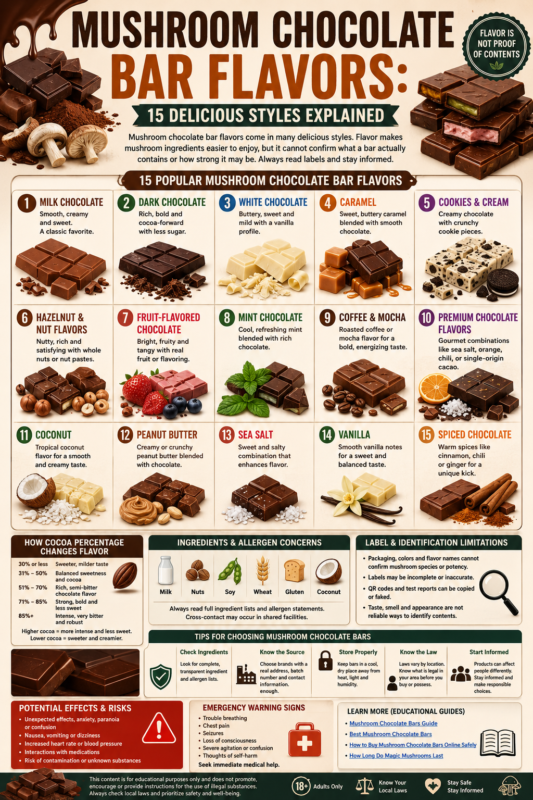
Mushroom chocolate bar flavors range from familiar milk and dark chocolate to caramel, cookies and cream, fruit, mint, coffee and luxury-inspired varieties. Flavor can make mushroom ingredients easier to combine with chocolate, but it cannot confirm what type of mushroom a bar contains, whether the ingredient list is accurate or whether a psychoactive compound is present.
Some mushroom chocolate products contain ordinary functional mushrooms such as lion’s mane, reishi or cordyceps. Others are marketed with vague psychedelic, magic or proprietary-blend claims. These categories should not be treated as identical.
This guide explains popular mushroom chocolate bar flavors, how cocoa percentage changes taste, common allergens and why labels, colors and packaging cannot reliably verify chemical contents. It does not provide dosing, preparation or consumption instructions.
Table of Contents
- Most Popular Mushroom Chocolate Bar Flavors
- Milk Chocolate
- Dark Chocolate
- White Chocolate
- Caramel
- Cookies and Cream
- Hazelnut and Nut Flavors
- Fruit-Flavored Chocolate
- Mint Chocolate
- Coffee and Mocha
- Premium Chocolate Flavors
- How Cocoa Percentage Changes Flavor
- Ingredients and Allergen Concerns
- Label and Identification Limitations
- How Flavor Affects Product Choice
- Sweet vs Bitter Flavors
- Texture and Flavor
- Cocoa Origin
- Natural vs Artificial Flavors
- Can Flavors Mask Ingredients?
- Seasonal Flavors
- Vegan Flavors
- Sugar-Free Flavors
- Why Flavor Names Can Mislead
- Color and Flavor
- Public-Health Evidence
- Evaluating Flavor Labels
- Frequently Asked Questions
Most Popular Mushroom Chocolate Bar Flavors
The most common mushroom chocolate bar flavors are based on familiar confectionery styles. Manufacturers often use sweet, creamy, bitter, fruity or roasted flavors to balance the naturally earthy taste associated with mushroom powders and extracts.
Popular styles include:
- Milk chocolate
- Dark chocolate
- White chocolate
- Caramel
- Cookies and cream
- Hazelnut
- Peanut butter
- Strawberry
- Orange
- Mint
- Coffee
- Mocha
- Coconut
- Sea salt
- Vanilla
Flavor does not establish whether a product contains functional mushrooms, psilocybin-producing mushrooms, synthetic compounds or no meaningful mushroom ingredient at all.
For a broader introduction, read our mushroom chocolate bars guide.
Milk Chocolate Mushroom Bars
Milk chocolate is one of the most popular mushroom chocolate bar flavors because it is sweet, creamy and familiar.
Typical milk chocolate ingredients may include:
- Cocoa solids
- Cocoa butter
- Sugar
- Milk powder
- Vanilla
- Emulsifiers such as soy lecithin
The sweetness can reduce the perception of bitter or earthy mushroom ingredients. However, it can also make taste an unreliable method of detecting unexpected substances.
Milk chocolate commonly contains dairy and soy. People with allergies or intolerances should check the complete label rather than relying on the product name.
Dark Chocolate Mushroom Bars
Dark chocolate is frequently chosen for mushroom products because its bitter cocoa profile pairs naturally with earthy flavors.
Dark mushroom chocolate bar flavors may include:
- Plain high-cocoa chocolate
- Dark chocolate and sea salt
- Dark chocolate and orange
- Dark chocolate and mint
- Dark chocolate and coffee
- Dark chocolate with nuts
Higher cocoa content usually produces a stronger, less sweet flavor. However, “dark chocolate” has no single universal recipe, and some products still contain milk, large amounts of sugar or artificial flavoring.
A high cocoa percentage says something about the chocolate formula. It does not verify mushroom identity, concentration or safety.
White Chocolate Mushroom Bars
White chocolate usually contains cocoa butter, sugar, milk solids and flavoring but little or no cocoa solids.
Its mild taste provides a neutral base for sweeter mushroom chocolate bar flavors, including:
- Vanilla
- Cookies and cream
- Strawberry
- Raspberry
- Coconut
- Birthday-cake flavor
White chocolate may soften or melt more easily in warm conditions. Heat damage can affect texture, appearance and ingredient distribution.
The pale color cannot confirm that a product is uncontaminated. Powders, extracts and artificial coloring may all change its final appearance.
Caramel Mushroom Chocolate Bars
Caramel is a common choice among dessert-inspired mushroom chocolate bar flavors. It may appear as a flavoring, soft filling, hard caramel piece or salted-caramel layer.
Caramel products may contain:
- Milk
- Butter
- Glucose syrup
- Sugar
- Salt
- Artificial flavoring
Filled caramel bars can be more sensitive to heat and storage conditions. The filling may separate, leak or change texture over time.
A caramel flavor can also conceal bitterness, making taste an unreliable indicator of the product’s actual ingredients.
Cookies and Cream Mushroom Bars
Cookies and cream combines sweet white or milk chocolate with crushed chocolate-cookie pieces.
This style is popular because it creates a familiar dessert taste and masks earthy ingredients effectively.
Common allergen concerns include:
- Milk
- Wheat
- Gluten
- Soy
- Possible nut cross-contact
Different manufacturers use different cookie formulas, so two cookies-and-cream products may have completely different allergen profiles.
Hazelnut and Nut Flavors
Hazelnut is among the most established chocolate flavors worldwide. Other nut-based mushroom chocolate bar flavors include almond, peanut butter, pistachio, cashew and macadamia.
Nut products may use:
- Whole nuts
- Nut pieces
- Nut paste
- Natural flavoring
- Artificial flavoring
Severe nut allergies can be life-threatening. A product made in a shared facility may contain traces of peanuts or tree nuts even when nuts are not the main flavor.
Incomplete allergen information is a major warning sign, particularly for unregulated chocolate products.
Fruit-Flavored Mushroom Chocolate
Fruit-based mushroom chocolate bar flavors add sweetness, acidity and aroma.
Popular examples include:
- Strawberry
- Raspberry
- Blueberry
- Cherry
- Orange
- Lemon
- Banana
- Mango
- Passion fruit
The fruit component may come from dried fruit, fruit powder, puree, oils or artificial flavoring.
Products containing moisture-rich fillings may have a shorter shelf life than plain solid chocolate. Poor storage can increase the risk of separation, deterioration or mold.
Mint Chocolate Mushroom Bars
Mint chocolate is commonly paired with dark or milk chocolate. Peppermint oil, mint extract or artificial flavoring may be used.
Mint creates a cooling sensation and a strong aroma. That intensity can cover unusual tastes or odors, so it should not be used to judge freshness or ingredient quality.
Popular mint styles include:
- Dark chocolate mint
- Mint-chip chocolate
- Peppermint cream
- Mint cookies and cream
Coffee and Mocha Mushroom Bars
Coffee and mocha are popular premium-style mushroom chocolate bar flavors. They combine roasted coffee notes with chocolate and may complement naturally earthy mushroom ingredients.
Some products contain real coffee or caffeine, while others use flavoring only.
Caffeine may contribute to:
- Increased alertness
- Restlessness
- Anxiety
- Faster heart rate
- Difficulty sleeping
A responsible label should state whether caffeine is present. “Mocha flavor” should not automatically be interpreted as caffeine-free.
Premium Chocolate Flavors
Premium mushroom chocolate bar flavors often use more complex combinations and higher-quality confectionery ingredients.
Examples include:
- Single-origin dark chocolate
- Dark chocolate with sea salt
- Caramel and roasted hazelnut
- Orange and dark chocolate
- Espresso and cocoa nib
- Raspberry and white chocolate
- Pistachio cream
- Coconut and vanilla
- Chili and dark chocolate
- Salted peanut butter
The word “premium” is not a regulated guarantee of mushroom-product quality. It may refer only to packaging, flavor design or price.
Premium chocolate should still provide transparent ingredients, allergen warnings, manufacturer details and batch information.
How Cocoa Percentage Changes Flavor
Cocoa percentage influences sweetness, bitterness, texture and intensity.
| Cocoa Level | Typical Flavor Profile |
|---|---|
| Lower cocoa percentage | Sweeter, creamier and milder |
| Moderate cocoa percentage | Balanced cocoa flavor and sweetness |
| Higher cocoa percentage | More bitter, intense and less sweet |
| Very high cocoa percentage | Strong, dry and highly cocoa-forward |
Higher cocoa does not necessarily mean better quality. Cocoa origin, processing, cocoa-butter content, sugar, storage and manufacturing also affect the final product.
Cocoa percentage cannot confirm the identity or amount of any mushroom-related ingredient.
Ingredients and Allergen Concerns
Comparing mushroom chocolate bar flavors requires careful attention to ingredients and allergens.
Common allergens may include:
- Milk
- Soy
- Peanuts
- Tree nuts
- Wheat
- Gluten
- Coconut
- Sesame
Additional ingredients may include:
- Artificial colors
- Flavor extracts
- Preservatives
- Sugar alcohols
- Caffeine
- Botanical extracts
- Unspecified proprietary blends
Vague descriptions such as “magic blend,” “mushroom matrix” or “proprietary botanical formula” do not provide enough information to assess a product confidently.
People with allergies should not rely on flavor names or wrapper colors. The complete ingredient and cross-contact statement is more important.
Label and Identification Limitations
Packaging can describe mushroom chocolate bar flavors, but it cannot independently prove what the bar contains.
A label cannot guarantee:
- The mushroom species
- The presence of a claimed active compound
- Concentration
- Purity
- Even ingredient distribution
- Absence of another drug
- Absence of contaminants
Counterfeit wrappers may reproduce familiar logos, flavors, fonts and QR codes. Empty branded packaging may also be filled by unrelated parties.
A laboratory report is useful only when it is authentic, complete and traceable to the exact batch. A screenshot or QR code may refer to another product or an older batch.
Processed chocolate cannot be identified using the same visual features used to examine whole mushrooms. Color, taste, smell and texture are not reliable chemical tests.
How Mushroom Chocolate Bar Flavors Affect Product Choice
Mushroom chocolate bar flavors strongly influence how products are marketed and compared. Sweet, bitter, fruity, nutty and dessert-style profiles may appeal to different preferences, but flavor should be treated as a confectionery characteristic rather than proof of mushroom quality.
Consumers may compare mushroom chocolate bar flavors according to:
- Sweetness
- Bitterness
- Creaminess
- Cocoa intensity
- Fruit acidity
- Nutty richness
- Mint freshness
- Coffee or roasted notes
- Texture
- Aftertaste
A pleasant flavor does not verify mushroom species, active ingredients, concentration or legal status. Strong flavoring may make it even harder to notice unexpected tastes or odors.
Sweet vs Bitter Mushroom Chocolate Bar Flavors
Sweet and bitter mushroom chocolate bar flavors appeal to different audiences. Milk, white, caramel and cookies-and-cream bars tend to emphasize sweetness, while dark chocolate and coffee styles usually have more bitterness.
Sweeter products may use:
- Added sugar
- Milk powder
- Caramel
- Cookie pieces
- Fruit fillings
- Vanilla flavoring
More bitter products may use:
- Higher cocoa percentages
- Cocoa nibs
- Coffee
- Roasted nuts
- Dark chocolate
- Less added sugar
Neither sweet nor bitter mushroom chocolate bar flavors can reveal what mushroom ingredient is present. Bitterness should not be treated as proof of strength, while sweetness should not be treated as proof of safety.
How Texture Changes Mushroom Chocolate Bar Flavors
Texture can influence how mushroom chocolate bar flavors are experienced. Smooth chocolate may seem creamier, while bars containing cookies, nuts or fruit pieces may feel more complex.
Common textures include:
- Smooth solid chocolate
- Crunchy cookie pieces
- Soft caramel filling
- Nut fragments
- Crisp rice or cereal pieces
- Fruit pieces
- Ganache or cream centers
- Grainy mushroom powder
A grainy texture may reflect cocoa particles, sugar crystallization, mushroom powder or poor mixing. Texture alone cannot determine whether a product is authentic or evenly formulated.
Filled bars require additional attention because internal ingredients may deteriorate differently from the outer chocolate shell.
Cocoa Origin and Premium Mushroom Chocolate Bar Flavors
Premium mushroom chocolate bar flavors may emphasize cocoa origin, roasting style and bean variety.
Chocolate makers sometimes describe cocoa as having notes of:
- Red fruit
- Citrus
- Caramel
- Nuts
- Coffee
- Spices
- Floral aromas
- Earthy tones
These flavor notes may develop naturally from cocoa genetics, growing region, fermentation and roasting. They are not necessarily added ingredients.
Single-origin or artisan claims may indicate greater attention to chocolate production, but they do not verify the mushroom component. Premium cocoa and accurate mushroom labeling must be evaluated separately.
Natural vs Artificial Mushroom Chocolate Bar Flavors
Mushroom chocolate bar flavors may come from natural ingredients, artificial flavorings or a combination of both.
Natural flavor sources may include:
- Vanilla
- Coffee
- Fruit powders
- Essential oils
- Nut pastes
- Coconut
- Mint extracts
- Spices
Artificial flavors may imitate similar tastes while using smaller quantities and producing more consistent results.
The terms “natural” and “artificial” do not determine whether a product is healthy, safe or accurately labeled. Some natural ingredients can cause allergic reactions, while some artificial flavorings may be used safely within regulated food standards.
The complete ingredient list matters more than marketing language.
Can Mushroom Chocolate Bar Flavors Mask Other Ingredients?
Strong mushroom chocolate bar flavors can hide bitterness, earthy notes and unusual aftertastes. Caramel, mint, coffee, fruit and cookies-and-cream styles are particularly effective at dominating the flavor profile.
This creates an identification limitation. Taste cannot reliably determine:
- Which mushroom species is present
- Whether psilocybin is present
- Whether another psychoactive substance is present
- Whether ingredients are evenly distributed
- Whether contamination has occurred
- Whether a label is accurate
A bar tasting pleasant or familiar does not prove that its ingredients are ordinary food ingredients.
Likewise, an unpleasant taste does not prove that a particular active compound is present.
Seasonal Mushroom Chocolate Bar Flavors
Seasonal mushroom chocolate bar flavors may be introduced around holidays or special events.
Common seasonal varieties include:
- Peppermint chocolate
- Pumpkin spice
- Gingerbread
- Cinnamon
- Salted caramel
- Orange chocolate
- Berry chocolate
- Birthday cake
Limited-edition packaging can increase urgency and encourage quick decisions. However, seasonal graphics do not provide any extra assurance about ingredients, testing or manufacturing quality.
Consumers should evaluate limited-edition bars using the same standards as ordinary products.
Vegan Mushroom Chocolate Bar Flavors
Vegan mushroom chocolate bar flavors may use dark chocolate or plant-based alternatives to dairy.
Possible milk substitutes include:
- Oat milk
- Coconut milk
- Almond milk
- Rice milk
- Soy milk
- Cashew milk
A vegan label does not mean that a bar is free from allergens. Almond, cashew, soy and coconut ingredients may create significant allergy concerns.
Cross-contact with dairy may also occur in shared facilities. People with severe allergies should look for clear allergen statements rather than relying only on a vegan logo.
Sugar-Free Mushroom Chocolate Bar Flavors
Sugar-free mushroom chocolate bar flavors may use alternative sweeteners instead of ordinary sugar.
Examples may include:
- Erythritol
- Maltitol
- Stevia
- Monk fruit
- Allulose
- Sucralose
Some sugar alcohols can cause digestive symptoms, including gas, cramping or diarrhea. Sugar-free products may also contain carbohydrates and calories from other ingredients.
Consumers with diabetes or metabolic conditions should not assume that every sugar-free bar has the same nutritional profile.
Why Flavor Names Can Be Misleading
Names used for mushroom chocolate bar flavors may describe marketing concepts rather than exact recipes.
For example:
- “Strawberry” may contain flavoring but no real fruit.
- “Mocha” may or may not contain caffeine.
- “Hazelnut” may use flavoring rather than whole nuts.
- “White chocolate” may use a confectionery coating instead of cocoa butter.
- “Premium dark” may not display a cocoa percentage.
Flavor titles should therefore be checked against the complete ingredients.
Misleading flavor names are especially concerning when the product also uses unclear mushroom terminology.
Color Does Not Confirm Mushroom Chocolate Bar Flavors
Color is often used to communicate mushroom chocolate bar flavors. Pink may suggest strawberry, green may suggest mint and orange may suggest citrus or caramel.
However, color may come from:
- Natural plant pigments
- Artificial food coloring
- Cocoa content
- Fruit powder
- Spices
- Oxidation
- Storage damage
A bright color cannot confirm flavor ingredients, mushroom identity or freshness. Similarly, fading or discoloration may indicate heat, light exposure or age but does not reveal the full condition of a product.
Public-Health Evidence and Mushroom Chocolate Bar Flavors
Public-health investigations have shown that products marketed with attractive mushroom branding and dessert-style flavors may still contain unexpected psychoactive compounds.
Testing of recalled mushroom edibles has identified different substances in different products, including compounds associated with Amanita mushrooms and psilocybin-related effects.
This means that mushroom chocolate bar flavors cannot be used to predict pharmacological effects.
Read the official FDA mushroom-edible investigation and the CDC outbreak summary for documented examples of illness linked to mushroom-branded chocolate, cones and gummies.
Evaluating Mushroom Chocolate Bar Flavor Labels
When reviewing mushroom chocolate bar flavors, a useful label should provide more than the flavor name.
Look for clearly stated:
- Chocolate ingredients
- Flavoring ingredients
- Mushroom species
- Type of mushroom material
- Allergens
- Manufacturer details
- Batch number
- Production or expiry date
- Storage instructions
Warning signs include:
- No manufacturer address
- No mushroom species listed
- No allergen statement
- Only a social-media contact
- Medical claims without evidence
- Spelling errors
- Copied brand graphics
- Unverifiable QR codes
Expanded Mushroom Chocolate Bar Flavors Summary
Mushroom chocolate bar flavors can make products more enjoyable as confectionery, but they cannot confirm chemical identity, mushroom species, concentration or safety.
Milk, dark, white, caramel, fruit, mint, coffee and premium chocolate styles differ in sweetness, bitterness, aroma and texture. Those differences belong to chocolate formulation rather than proof of psychoactive or functional mushroom quality.
The most responsible comparison of mushroom chocolate bar flavors considers full ingredients, cocoa percentage, allergens, manufacturer transparency, batch information and legal status.
Flavor should be treated as only one part of the product—not as a substitute for reliable labeling or scientific testing.
Health and Legal Considerations
Ordinary functional mushroom chocolate may be sold as a food or supplement when it complies with applicable regulations. Products containing controlled psychoactive ingredients may be prohibited.
Potential health concerns involving unidentified or psychoactive products include:
- Anxiety
- Panic
- Confusion
- Paranoia
- Nausea
- Vomiting
- Impaired coordination
- Changes in heart rate or blood pressure
- Medication interactions
- Accidental injury
Legal restrictions may apply to possession, production, supply, importation and exportation.
The fact that a product resembles an ordinary chocolate bar does not remove controlled-substance laws.
Frequently Asked Questions
What are the most popular mushroom chocolate bar flavors?
Popular choices include milk chocolate, dark chocolate, white chocolate, caramel, cookies and cream, hazelnut, fruit, mint, coffee and mocha.
Which mushroom chocolate flavor is sweetest?
White chocolate, milk chocolate, caramel and cookies-and-cream styles are generally sweeter than high-cocoa dark chocolate.
Which flavor hides earthy mushroom taste best?
Strong flavors such as caramel, mint, coffee, cookies and cream, and dark chocolate may cover earthy tastes. Flavor cannot verify product contents.
Are dark mushroom chocolate bars healthier?
Dark chocolate may contain more cocoa and less sugar than some milk chocolate products, but the overall nutritional profile depends on the complete recipe.
Do mushroom chocolate bars contain dairy?
Many milk and white chocolate bars contain dairy. Dark and vegan products may still contain traces because of shared manufacturing equipment.
Are mushroom chocolate bars gluten-free?
Some may be, but cookies, fillings and shared equipment can introduce wheat or gluten. Check the full allergen statement.
Can a flavor identify the mushroom inside?
No. Flavor cannot confirm mushroom species, active ingredients, concentration or purity.
Does premium packaging mean better quality?
No. Packaging and price may reflect marketing rather than verified ingredients or manufacturing standards.
Can mushroom chocolate bar flavors contain caffeine?
Coffee, mocha and certain energy-style products may contain caffeine. The label should identify this clearly.
Can two bars with the same flavor contain different ingredients?
Yes. Flavor names are not standardized recipes, so products from different manufacturers may have very different formulas.
Final Thoughts
Mushroom chocolate bar flavors include familiar milk, dark and white chocolate alongside caramel, cookies and cream, hazelnut, fruit, mint, coffee and luxury combinations.
Flavor affects sweetness, bitterness and texture, but it does not prove mushroom identity, potency, purity or safety.
The most useful way to compare mushroom chocolate bar flavors is to examine cocoa percentage, complete ingredients, allergens, manufacturer transparency, batch information and legal status.
Colorful wrappers, strong flavors and premium packaging should never replace accurate labels and verifiable information.
This article is provided for food-safety and public-health education. It does not recommend psychoactive products or provide purchasing, dosing, preparation or consumption instructions.
