
Jun
DMT Side Effects: 12 Essential Warning Signs and Health Risks
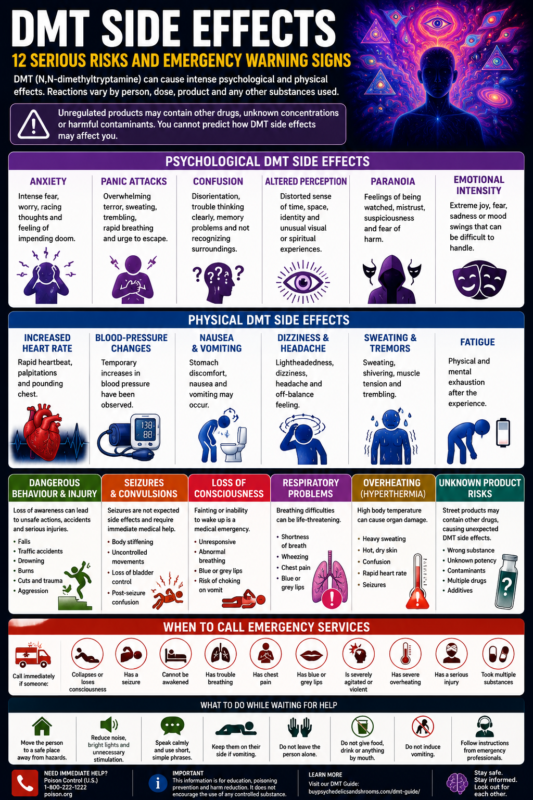
DMT side effects can involve intense psychological changes, temporary physical reactions and injuries caused by impaired awareness of the surrounding environment. Reported effects vary according to the actual substance, formulation, individual health, medicines and whether several substances were involved.
Controlled research has reported temporary increases in heart rate, blood pressure, anxiety and psychedelic effects after DMT administration. However, research participants are screened and monitored, so these findings cannot establish the safety of unregulated powders, cartridges, herbal mixtures or unknown products.
This educational guide explains possible DMT side effects, anxiety, panic, confusion, cardiovascular changes, dangerous behaviour and emergency warning signs. It does not provide instructions for obtaining, dosing, preparing or consuming DMT.
Table of Contents
- What Are the Main DMT Side Effects?
- 12 Essential DMT Side-Effect Facts
- Psychological DMT Side Effects
- Anxiety and Panic
- Confusion and Disorientation
- Increased Heart Rate
- Blood-Pressure Changes
- Nausea, Dizziness and Headache
- Dangerous Behaviour and Injuries
- Seizures and Loss of Consciousness
- Persistent Psychological Effects
- Unknown-Product Risks
- When to Call Emergency Services
- Factors That Change DMT Side Effects
- Short-Term Psychological Reactions
- Physical DMT Side Effects
- Medicine Interactions
- Multiple-Substance Exposure
- Mental-Health Vulnerability
- Accidental Injury Risks
- Breathing Problems
- Severe Agitation
- Loss of Consciousness
- How Long Side Effects Can Last
- Frequently Asked Questions
What Are the Main DMT Side Effects?
The main DMT side effects may affect perception, mood, thinking, coordination and cardiovascular function. Some reactions are brief and resolve as the acute effects decrease, while others may require medical attention.
Reported psychological reactions can include:
- Intense visual experiences
- Altered time perception
- Anxiety
- Panic
- Confusion
- Disorientation
- Fear
- Paranoia
- Loss of ordinary self-awareness
- Difficulty communicating
Reported physical reactions can include:
- Increased heart rate
- Blood-pressure changes
- Nausea
- Dizziness
- Headache
- Palpitations
- Fatigue
- Loss of coordination
- Temperature changes
For a broader overview of dimethyltryptamine, visit our complete DMT guide.
12 Essential DMT Side-Effect Facts
1. DMT Side Effects Differ Between People
Individual reactions can vary substantially. One person may report wonder or euphoria, while another may experience intense fear, panic or confusion.
Possible influencing factors include:
- Personal mental-health history
- Cardiovascular health
- Medicines
- Other substances
- The actual chemical present
- Product concentration
- Environment
- Expectations and emotional state
2. Anxiety Can Escalate Rapidly
One of the most commonly discussed psychological DMT side effects is anxiety. Rapid changes in perception may feel overwhelming, especially when the person does not understand what is happening.
Anxiety may involve trembling, sweating, racing thoughts, fear of dying, chest tightness or a strong urge to escape.
3. Panic May Lead to Unsafe Behaviour
A person experiencing panic may attempt to run, leave a safe location, resist assistance or move toward traffic, water, stairs or other hazards.
The immediate danger may therefore come from impaired judgement and environmental risk rather than the drug’s direct physical effects alone.
4. Confusion Can Prevent Clear Communication
DMT may temporarily interfere with a person’s ability to understand questions, describe symptoms or recognise familiar surroundings.
Confusion is especially concerning when it continues longer than expected, worsens, or occurs with overheating, injury, breathing difficulty or unconsciousness.
5. Heart Rate May Increase
Clinical studies have reported temporary increases in heart rate after DMT administration. Palpitations or awareness of a rapid heartbeat may also worsen anxiety.
Chest pain, fainting, severe shortness of breath or an irregular heartbeat should not be dismissed as an ordinary psychedelic effect.
6. Blood Pressure May Rise
Research has also reported temporary increases in systolic and diastolic blood pressure. The significance may differ according to the formulation, exposure and individual health.
People with cardiovascular disease may face additional uncertainty and should not rely on findings from carefully screened healthy volunteers.
7. Nausea and Dizziness May Occur
Possible DMT side effects include nausea, dizziness, headache, physical uneasiness and fatigue. These symptoms may increase the chance of falling or becoming injured.
Vomiting can become more dangerous when a person is extremely confused, heavily sedated or unconscious because of the risk of aspiration.
8. Unknown Products May Cause Different Symptoms
A product represented as DMT may contain another tryptamine, several substances, contaminants or no DMT at all.
Symptoms that seem unusual for DMT may be caused by:
- Another psychoactive drug
- An unexpectedly concentrated product
- Multiple substances
- Contamination
- Medicine interactions
- A separate medical emergency
9. Vape Products Add Respiratory and Hardware Risks
DMT cartridges and vape pens may expose users to unknown liquids, heated aerosol, particles, metals and thermal degradation products.
Breathing difficulty, chest pain, blue or grey lips and severe coughing require urgent medical evaluation.
Our DMT pen article explains why device appearance and branding cannot confirm contents.
10. Dangerous Behaviour Is an Emergency Concern
Severe agitation, aggression, attempts to enter unsafe areas or threats of self-harm should be treated seriously.
Do not argue aggressively with a disoriented person. Reduce stimulation, remove immediate hazards when safe and call emergency services when there is a danger of injury.
11. Seizures and Unconsciousness Are Not Minor Side Effects
A seizure, collapse or inability to awaken requires immediate emergency assistance. These symptoms may indicate severe poisoning, another substance, an underlying medical condition or multiple-drug exposure.
Do not wait for the presumed effects to end.
12. Research Findings Do Not Guarantee Street-Product Safety
Clinical DMT studies use known formulations, screened volunteers, measured exposure and medical monitoring.
Unregulated materials may differ in identity, purity, concentration and contamination. Research findings should not be used to declare unknown powders, cartridges or mixtures safe.
Psychological DMT Side Effects
Psychological DMT side effects may be intense even when brief. The person may temporarily lose their ordinary understanding of time, location and identity.
Possible effects include:
- Overwhelming visual imagery
- Fear of losing control
- Paranoia
- Distorted perception of people or surroundings
- Difficulty distinguishing internal imagery from the environment
- Temporary inability to communicate
- Emotional distress
- A sense of detachment from the body
The experience may feel completely real to the affected person. Calm reassurance is generally more useful than arguing about what they are perceiving.
DMT Anxiety and Panic
Anxiety and panic can arise when perceptual changes become stronger or stranger than expected. A person may believe they are dying, permanently losing control or trapped in the experience.
Signs of severe panic may include:
- Rapid breathing
- Trembling
- Repeated statements of fear
- Attempting to flee
- Grabbing other people
- Removing clothing because of perceived overheating
- Inability to follow simple instructions
If panic becomes dangerous, persists or is accompanied by medical symptoms, contact emergency professionals.
Confusion and Disorientation
Confusion may prevent someone from recognising where they are, understanding danger or communicating what they took.
During severe disorientation:
- Move dangerous objects away when safe.
- Keep the person away from traffic, water and heights.
- Reduce loud sounds and bright lights.
- Speak calmly using short sentences.
- Do not leave the person alone when they are at risk.
- Call for professional help if safety cannot be maintained.
Persistent confusion after the expected acute period requires medical assessment.
Increased Heart Rate and Palpitations
Controlled studies have observed temporary increases in heart rate following DMT administration. The cardiovascular response may vary according to the formulation and exposure.
Seek urgent help for:
- Chest pain
- Fainting
- Severe breathlessness
- A very irregular heartbeat
- Blue or grey lips
- Sudden weakness
- Symptoms that continue or worsen
Anxiety can also cause a racing heartbeat, but it is unsafe to assume that every cardiovascular symptom is caused only by panic.
DMT and Blood-Pressure Changes
Temporary blood-pressure increases have been documented in controlled human studies. Results vary between study designs and administration methods.
Blood pressure cannot be estimated from how someone feels. Severe headache, chest pain, neurological symptoms, collapse or confusion may require urgent evaluation.
People with existing heart or blood-vessel conditions may face risks not represented by small studies in screened volunteers.
Nausea, Dizziness, Headache and Fatigue
Some people report physical discomfort such as nausea, dizziness, headache or fatigue. These effects may be mild, but they can become dangerous when combined with confusion or poor coordination.
A dizzy or disoriented person may fall, strike their head or enter an unsafe area. Vomiting while unconscious or unable to protect the airway is an emergency.
Seek medical assistance if symptoms are severe, unexpected, persistent or accompanied by breathing difficulty, chest pain, seizure or reduced consciousness.
Dangerous Behaviour and Accidental Injury
Profound changes in perception may temporarily reduce awareness of ordinary hazards. Reported DMT side effects may therefore contribute indirectly to:
- Falls
- Head injuries
- Burns
- Traffic injuries
- Drowning risk
- Self-inflicted injury
- Aggressive encounters
A published intoxication case involving a DMT-containing preparation described severe psychosis, property damage and personal injury. A single case does not predict every reaction, but it demonstrates why dangerous behaviour should not be ignored.
Seizures and Loss of Consciousness
Seizure, collapse, coma-like unresponsiveness and difficulty breathing are emergency warning signs rather than expected minor reactions.
If a seizure occurs:
- Call emergency services.
- Move nearby hard or sharp objects away.
- Do not place anything in the person’s mouth.
- Do not forcibly restrain their movements.
- Follow instructions from the emergency dispatcher.
If the person is not breathing normally, begin emergency measures as instructed by local services or a trained dispatcher.
Persistent Psychological Effects
Most acute psychedelic effects are time-limited, but some people may experience continuing anxiety, disturbed sleep, paranoia, unusual perceptions or difficulty processing the experience.
Seek professional assessment when symptoms include:
- Persistent hallucinations
- Paranoia
- Several nights without sleep
- Symptoms resembling mania
- Severe depression
- Thoughts of self-harm
- Inability to return to ordinary responsibilities
People with a personal or family history of psychosis or bipolar disorder may face additional uncertainty.
Unknown Products and Misleading Labels
Appearance cannot prove that a product contains DMT. Crystals, powders, vape liquid, cartridges and plant materials may be inaccurately labelled.
Read what DMT looks like for a detailed explanation of why colour, texture and packaging cannot confirm identity.
An unknown product may contain:
- Another tryptamine
- A stimulant
- A sedating substance
- Several active drugs
- Residual production chemicals
- Unknown vape additives
- No DMT at all
When seeking medical help, describe it as an unknown product represented as DMT rather than insisting the label is accurate.
When to Call Emergency Services
Call emergency services immediately if someone who may have taken DMT or another unknown substance:
- Collapses or loses consciousness
- Has a seizure
- Has difficulty breathing
- Cannot be awakened
- Experiences chest pain
- Develops blue or grey lips
- Shows severe overheating
- Becomes dangerously agitated
- Threatens self-harm or harm to others
- Suffers a serious injury
- May have taken several substances
While waiting for help:
- Move the person away from traffic, water, heights and fire when safe.
- Reduce bright lights, noise and unnecessary stimulation.
- Speak calmly and avoid confrontation.
- Do not leave an unconscious person alone.
- Do not force food or drink.
- Do not encourage vomiting.
- Follow instructions from emergency professionals.
In the United States, contact Poison Control for immediate guidance. People elsewhere should contact their local poison centre or emergency service.
Frequently Asked Questions
What are the most common DMT side effects?
Reported effects include intense perceptual changes, anxiety, panic, confusion, increased heart rate, blood-pressure changes, nausea, dizziness, headache and temporary loss of environmental awareness.
Can DMT cause anxiety?
Yes. Controlled studies and user reports have described anxiety during acute DMT effects.
Can DMT cause panic?
Yes. Rapid and overwhelming perceptual changes may trigger severe fear or panic.
Does DMT increase heart rate?
Controlled human studies have reported temporary increases in heart rate after DMT administration.
Does DMT affect blood pressure?
Yes. Temporary increases in blood pressure have been observed in controlled studies.
Can DMT cause confusion?
Yes. Intense changes in perception and awareness may temporarily cause confusion or disorientation.
Can DMT cause dangerous behaviour?
Severe panic, confusion or loss of environmental awareness may lead to unsafe movement, aggression or accidental injury.
Are seizures a normal DMT side effect?
No. A seizure should be treated as a medical emergency, especially when the product and other substances involved are unknown.
Can someone lose consciousness after DMT?
Loss of consciousness or inability to awaken requires immediate emergency assistance and should not be assumed to be an ordinary effect.
When should emergency services be called?
Factors That Can Change DMT Side Effects
DMT side effects are not identical for every person. The intensity and character of a reaction can be influenced by physical health, emotional state, other substances, medicines and the actual contents of the product.
Two people exposed to products sold under the same name may experience very different reactions. This may happen because the products contain different chemicals, concentrations or contaminants.
Important factors that may influence DMT side effects include:
- Personal mental-health history
- Heart and blood-vessel health
- Current stress or anxiety
- Prescription medicines
- Use of alcohol or other drugs
- Unknown product concentration
- Contamination or substitution
- The surrounding environment
- Sleep deprivation
- Previous traumatic experiences
Because so many variables are involved, DMT side effects cannot be predicted confidently from a product label, photograph or another person’s experience.
Short-Term Psychological DMT Side Effects
Short-term psychological DMT side effects may begin with rapid changes in visual perception, sense of time, personal identity and awareness of the surrounding environment.
Some people describe the experience as meaningful or emotionally intense. Others may feel terrified, trapped or unable to understand what is happening.
Possible short-term psychological reactions include:
- Intense fear
- Panic
- Confusion
- Paranoia
- Emotional distress
- Loss of ordinary self-awareness
- Difficulty recognising familiar people
- Difficulty speaking clearly
- Distorted perception of distance or movement
- Temporary loss of environmental awareness
These DMT side effects can increase the risk of accidental injury when a person attempts to walk, run, drive, climb or leave a safe environment while disoriented.
Physical DMT Side Effects
Physical DMT side effects may occur alongside psychological changes. Controlled research has reported temporary cardiovascular changes, although findings from monitored studies do not guarantee the safety of unregulated products.
Possible physical reactions include:
- Increased heart rate
- Palpitations
- Blood-pressure increases
- Dizziness
- Nausea
- Headache
- Sweating
- Trembling
- Changes in body temperature
- Poor coordination
- Physical weakness
- Fatigue after the acute experience
Some physical DMT side effects may resemble symptoms caused by anxiety. However, chest pain, fainting, severe breathing difficulty or an irregular heartbeat should never automatically be dismissed as panic.
Medicine Interactions and DMT Side Effects
Medicine interactions can make DMT side effects more difficult to predict. A person may not realise that a prescription, over-the-counter medicine or herbal product can influence their reaction.
Potentially relevant categories may include:
- Antidepressants
- Stimulant medicines
- Blood-pressure medicines
- Heart medicines
- Sedatives
- Monoamine oxidase inhibitors
- Other psychiatric medicines
The presence of another substance can also change the clinical picture. Severe agitation, overheating, confusion, muscle rigidity, irregular heartbeat or loss of consciousness may indicate a serious medical problem rather than an ordinary psychedelic reaction.
Medical professionals should be told about all known medicines and substances involved. Accurate information can help them assess DMT side effects and possible interactions more safely.
DMT Side Effects With Multiple Substances
Combining drugs can intensify or alter DMT side effects. Alcohol, stimulants, cannabis, sedatives and other psychedelics may change judgement, coordination, heart rate, breathing and emotional stability.
Multiple-substance exposure can make it harder to determine which substance caused a particular symptom. It may also increase the risk of:
- Severe confusion
- Agitation
- Vomiting
- Aspiration
- Falls
- Loss of consciousness
- Cardiovascular stress
- Breathing problems
- Delayed emergency treatment
When seeking medical help, report every substance that may have been taken. Do not assume that all observed DMT side effects came from DMT alone.
Mental-Health Vulnerability and DMT Side Effects
People with a personal or family history of psychosis, mania or severe anxiety may face additional uncertainty. Intense perceptual changes can sometimes worsen fear, paranoia or disorganised thinking.
Concerning psychological DMT side effects may include:
- Persistent paranoia
- Inability to sleep for several nights
- Severe mood elevation
- Unusual beliefs that continue after intoxication
- Persistent hallucinations
- Severe depression
- Thoughts of suicide or self-harm
- Inability to manage daily responsibilities
Symptoms that continue after the acute experience require professional assessment. A person should not be left alone when they are threatening self-harm, acting dangerously or unable to recognise reality.
Accidental Injuries Linked to DMT Side Effects
Some of the most serious harm associated with DMT side effects may result from impaired awareness rather than direct toxicity alone.
A person experiencing intense visual changes or confusion may misjudge distance, height, speed or danger. This can contribute to:
- Falls from stairs or balconies
- Walking into traffic
- Burns from flames or hot devices
- Cuts from broken glass
- Drowning
- Head injuries
- Conflict with other people
- Unsafe driving
Someone showing severe DMT side effects should be kept away from traffic, bodies of water, heights, weapons, fire and sharp objects whenever this can be done safely.
Breathing Problems and DMT Side Effects
Breathing difficulty is not a symptom to monitor casually. It may be related to panic, smoke exposure, a vape product, another drug, an allergic reaction or a separate medical emergency.
Respiratory warning signs include:
- Severe shortness of breath
- Wheezing
- Blue or grey lips
- Chest pain
- Very slow or irregular breathing
- Inability to speak normally
- Loss of consciousness
These are serious DMT side effects or poisoning signs that require immediate emergency evaluation.
Do not wait for the person to “come down” when breathing is impaired.
Severe Agitation and Dangerous DMT Side Effects
Severe agitation may involve shouting, aggression, panic, repetitive movements, attempts to escape or resistance to assistance.
When possible:
- Reduce noise and bright lighting.
- Remove unnecessary people from the area.
- Use calm, simple language.
- Avoid sudden movements.
- Do not argue about hallucinations.
- Keep a safe distance if aggression develops.
- Call emergency services when anyone is in danger.
Trying to physically restrain a severely agitated person without training can result in injury. Dangerous DMT side effects should be managed by emergency professionals.
Loss of Consciousness After Suspected DMT Exposure
Loss of consciousness is not a minor or reassuring DMT side effect. It may indicate severe poisoning, injury, reduced oxygen, seizure activity, another drug or an unrelated medical condition.
Call emergency services immediately if a person:
- Cannot be awakened
- Is breathing abnormally
- Has blue or grey lips
- Has suffered a head injury
- Vomits while unresponsive
- Has a seizure
- Has an unknown substance nearby
Follow the emergency dispatcher’s instructions. Do not force food, water or medicine into an unconscious person.
How Long Can DMT Side Effects Last?
The acute psychedelic experience is often described as relatively brief compared with some other psychedelics, but the duration of DMT side effects can vary.
Possible reasons symptoms may continue longer than expected include:
- The product contained another substance.
- Several substances were involved.
- The person experienced an injury.
- An underlying health condition was triggered.
- A medicine interaction occurred.
- Severe anxiety continued after the acute effects.
- The product concentration was unknown.
Persistent confusion, chest pain, breathing problems, severe anxiety, hallucinations or abnormal behaviour should be assessed professionally.
When DMT Side Effects Are Not Normal
People sometimes assume that every unusual symptom is simply part of a psychedelic experience. That assumption can delay lifesaving treatment.
Seek immediate help when DMT side effects involve:
- Seizures
- Collapse
- Loss of consciousness
- Breathing difficulty
- Blue or grey lips
- Chest pain
- Severe overheating
- Violent or suicidal behaviour
- Serious injury
- Persistent severe confusion
The exact identity of the product does not need to be confirmed before calling for help. Emergency professionals can begin treating symptoms while investigating the likely exposure.
DMT Side Effects Summary
DMT side effects may involve anxiety, panic, confusion, altered perception, increased heart rate, blood-pressure changes, dizziness, nausea and impaired awareness.
More serious DMT side effects can include seizures, collapse, breathing difficulty, chest pain, dangerous behaviour, severe agitation and loss of consciousness.
Unknown powders, cartridges, liquids and plant preparations increase uncertainty because they may contain different chemicals, concentrations or contaminants.
Any severe or unexpected DMT side effects should be treated as a possible poisoning or medical emergency rather than assumed to be harmless.
Call immediately for collapse, seizure, breathing difficulty, inability to awaken, chest pain, severe overheating, dangerous agitation or a serious injury.
Final Thoughts
DMT side effects may include anxiety, panic, confusion, increased heart rate, blood-pressure changes, nausea, dizziness and temporary loss of environmental awareness.
Unregulated products add uncertainty because their identity, concentration and contaminants may be unknown. Seizures, collapse, breathing difficulty, chest pain and dangerous behaviour require immediate professional assistance.
This article is provided for education, poisoning prevention and harm reduction. It does not encourage the purchase, possession or use of controlled substances.
