
Aug
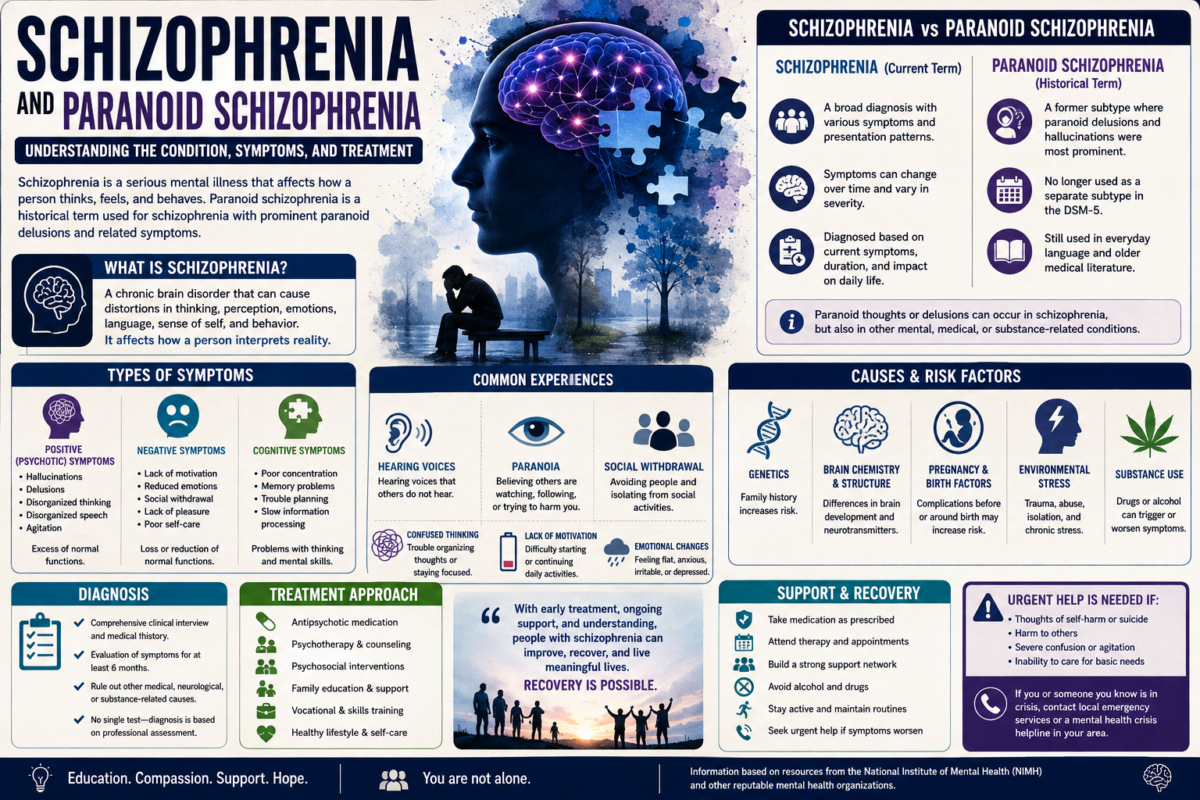
Schizophrenia and paranoid schizophrenia are terms often used when discussing serious psychotic disorders, but modern mental-health terminology requires an important distinction. Schizophrenia is a recognized psychiatric disorder involving disruptions in thinking, perception, emotions, behavior, and the ability to interpret reality. The term “paranoid schizophrenia” was historically used to describe a subtype characterized prominently by paranoid delusions and related psychotic symptoms, but it is no longer used as a separate schizophrenia subtype in the current DSM-5 diagnostic framework.
Understanding this distinction matters because schizophrenia does not look exactly the same in every person. Some individuals experience prominent hallucinations or delusions, while others may have significant difficulties involving motivation, emotional expression, cognition, communication, or everyday functioning. Symptoms can also change over time.
The word paranoid is still useful when describing particular symptoms or experiences. For example, someone experiencing psychosis may develop persecutory beliefs involving fears that other people are watching, following, controlling, threatening, or trying to harm them. However, having paranoid thoughts does not automatically mean that someone has schizophrenia.
This comprehensive guide explores schizophrenia and paranoid schizophrenia, including the modern terminology, symptoms, psychosis, delusions, hallucinations, causes and risk factors, diagnosis, treatment, recovery, family support, and common misconceptions.
Table of Contents
- What Is Schizophrenia?
- What Is Paranoid Schizophrenia?
- Is Paranoid Schizophrenia Still a Diagnosis?
- What Is Psychosis?
- Positive and Psychotic Symptoms
- Negative Symptoms
- Cognitive Symptoms
- Delusions and Paranoid Beliefs
- Hallucinations
- Causes and Risk Factors
- Diagnosis
- Treatment
- Recovery and Long-Term Support
- Frequently Asked Questions
What Is Schizophrenia?
Schizophrenia is a serious mental illness that can affect how a person thinks, feels, behaves, and experiences the world. Symptoms can sometimes make it difficult to distinguish what is real from what is not, communicate clearly, maintain relationships, or manage everyday activities.
Schizophrenia is not simply having an unusual personality, having multiple personalities, or occasionally feeling suspicious. It is a complex psychiatric disorder involving a range of possible symptoms and changes in functioning.
According to the National Institute of Mental Health, schizophrenia symptoms generally fall into three broad categories: psychotic symptoms, negative symptoms, and cognitive symptoms. These categories can overlap, and individual experiences vary considerably.
People are commonly diagnosed during adolescence or early adulthood, although symptoms can emerge at different ages. Early recognition and treatment following the emergence of psychotic symptoms can be important for long-term outcomes.
What Is Paranoid Schizophrenia?
Paranoid schizophrenia is a historical term that was commonly used to describe schizophrenia presentations in which paranoid delusions, suspiciousness, and hallucinations were particularly prominent.
A person experiencing prominent paranoid symptoms might believe that other people are monitoring them, attempting to harm them, communicating hidden messages, or conspiring against them. These beliefs can feel completely real to the person experiencing them, even when there is no objective evidence supporting them.
However, modern diagnostic systems have moved away from dividing schizophrenia into fixed subtypes such as “paranoid,” “disorganized,” or “catatonic.” Instead, clinicians assess the person’s specific symptoms, their severity, duration, functional effects, and overall clinical history.
Is Paranoid Schizophrenia Still a Diagnosis?
The phrase paranoid schizophrenia remains common in everyday language and older medical literature, but it should not be treated as a current standalone subtype of schizophrenia under DSM-5 terminology.
This change reflects the understanding that schizophrenia symptoms can vary considerably within the same person and can change throughout the course of illness. Rather than assigning someone permanently to a particular subtype, modern assessment focuses on the symptoms actually present.
Therefore, someone can experience prominent paranoia or persecutory delusions while still being diagnosed and described within the broader schizophrenia spectrum without using “paranoid schizophrenia” as a separate subtype.
What Is Psychosis?
Psychosis refers to a collection of symptoms involving a loss of contact with reality. It can affect thoughts, perceptions, beliefs, speech, and behavior.
Psychosis can occur in schizophrenia, but schizophrenia is not the only possible cause of psychotic symptoms. Psychosis can also occur in certain mood disorders, substance-related conditions, neurological illnesses, and other medical or psychiatric circumstances.
This distinction is important because experiencing psychosis does not automatically mean that a person has schizophrenia. A qualified healthcare professional needs to evaluate the person’s symptoms, history, medical circumstances, and possible alternative explanations.
Psychotic or Positive Symptoms
Psychotic symptoms associated with schizophrenia can include hallucinations, delusions, and disorganized thinking or speech.
Hallucinations involve experiencing sensations that are not actually present. Hearing voices is one of the more commonly reported forms, although hallucinations can involve other senses as well.
Delusions are strongly held beliefs that are not consistent with available evidence. They can take different forms, including persecutory beliefs, grandiose beliefs, or beliefs involving unusual interpretations of ordinary events.
Disorganized thinking can affect how a person organizes thoughts and communicates. Speech may become difficult to follow, topics may shift unexpectedly, or ideas may become difficult to connect logically.
Negative Symptoms
Negative symptoms involve reductions or losses in certain normal functions or behaviors. They can be especially important because they may be less obvious than hallucinations or delusions.
Examples can include reduced motivation, decreased interest or enjoyment, social withdrawal, reduced emotional expression, low energy, and difficulty initiating or maintaining everyday activities.
These symptoms can sometimes be mistaken for depression, laziness, lack of interest, or intentional social isolation. A professional assessment is therefore important when significant changes in motivation, functioning, or emotional expression persist.
Cognitive Symptoms
Cognitive symptoms can affect attention, concentration, working memory, processing information, and decision-making.
A person may have difficulty following a conversation, remembering appointments, organizing tasks, learning new information, or maintaining focus on a particular activity.
Cognitive difficulties can have a significant effect on everyday functioning even when more obvious psychotic symptoms have become less prominent.
Delusions and Paranoid Beliefs
Paranoid or persecutory beliefs are among the experiences historically associated with the term paranoid schizophrenia.
A person may believe that others are deliberately following them, spying on them, attempting to hurt them, or communicating secret messages specifically intended for them. These beliefs can be extremely distressing.
It is important to remember that a delusion is experienced as a genuine belief by the person. Responding with ridicule or hostility is unlikely to help. A calm, respectful approach combined with appropriate professional support is generally more constructive.
Hallucinations in Schizophrenia
Hallucinations involve perceptions occurring without an external stimulus that corresponds to the experience. They can involve hearing, seeing, smelling, tasting, or feeling something that others do not perceive.
Auditory hallucinations, particularly hearing voices, are commonly associated with schizophrenia. However, hallucinations are not exclusive to schizophrenia and can occur in other psychiatric, neurological, medical, or substance-related conditions.
Because of this, hallucinations should be evaluated in their broader clinical context rather than automatically interpreted as evidence of one particular disorder.
Causes and Risk Factors
There is no single known cause of schizophrenia. Current evidence suggests that the condition develops through a complex interaction between genetic vulnerability, brain development, and environmental or life experiences. Having a risk factor does not mean that a person will inevitably develop schizophrenia.
Genetics appear to play an important role. Schizophrenia can occur in families, but there is no single gene that determines whether someone will develop the disorder. Researchers have identified many genetic variations that can contribute to susceptibility.
Environmental influences may also matter. Factors investigated by researchers include complications before or around birth, certain infections, nutritional problems, stressful environments, trauma, and other developmental influences. The relationship between these factors is complex rather than straightforward.
Research into psychosis also shows that stress, trauma, sleep deprivation, certain medications, and alcohol or drug misuse can sometimes contribute to psychotic symptoms. These possibilities are important when clinicians evaluate someone experiencing hallucinations or delusions because psychosis does not automatically mean schizophrenia. :contentReference[oaicite:0]{index=0}
Genetics and Family History
A family history of schizophrenia can increase a person’s statistical risk, but it does not make the condition inevitable.
Researchers believe that many genetic factors contribute to vulnerability rather than one specific gene causing schizophrenia by itself. These genetic influences can interact with environmental and developmental factors.
This means that having a parent, sibling, or other relative with schizophrenia does not mean another family member will necessarily develop the condition. Genetic risk is one part of a much larger picture.
Brain Development and Neurobiology
Schizophrenia is also studied as a disorder involving brain development and function. Research has identified subtle differences in brain structure and connections in some people with schizophrenia, although these findings are not sufficiently specific to diagnose an individual through brain imaging alone.
Scientists continue to investigate how changes in brain circuits, neurotransmitter systems, genetics, and development may contribute to psychotic and cognitive symptoms.
Importantly, neuroscience does not suggest that schizophrenia can be reduced to a single chemical imbalance. The disorder involves multiple interacting biological and environmental factors.
Substance Use and Psychosis
The relationship between schizophrenia and substance use can be complicated. Certain substances can produce or worsen psychotic symptoms, while some people who develop schizophrenia may also use substances for reasons that include coping, social factors, or attempts to manage distress.
Alcohol and drug misuse can therefore make diagnosis and treatment more complicated. A clinician may need to determine whether psychotic symptoms are primarily related to a substance, an underlying psychiatric condition, another medical problem, or a combination of factors.
This is one reason professional assessment is particularly important when hallucinations, delusions, paranoia, or major behavioral changes occur after substance exposure. :contentReference[oaicite:1]{index=1}
When Does Schizophrenia Usually Begin?
Schizophrenia most commonly emerges during adolescence or early adulthood. NIMH reports that people are usually diagnosed between approximately ages 16 and 30, often following a first episode of psychosis. :contentReference[oaicite:2]{index=2}
However, the condition can develop outside this typical age range. Gradual changes in thinking, mood, social functioning, motivation, or behavior can sometimes occur before a more obvious psychotic episode.
Recognizing significant changes early can be important because early evaluation and treatment may improve the chances of better long-term functioning.
Possible Early Warning Signs
Before prominent psychotic symptoms develop, some people may experience changes in everyday functioning. These can include withdrawing socially, experiencing unusual changes in thinking, struggling with concentration, losing motivation, or experiencing significant changes in mood or behavior.
None of these signs alone proves that someone has schizophrenia. Similar changes can occur with depression, anxiety, trauma, substance use, sleep deprivation, medical conditions, and other circumstances.
The important consideration is whether changes are persistent, worsening, or accompanied by more serious symptoms such as hallucinations, delusions, severe confusion, or substantial impairment in daily life.
How Is Schizophrenia Diagnosed?
There is no single blood test, brain scan, or laboratory test that independently establishes a diagnosis of schizophrenia. Diagnosis involves a comprehensive assessment by a qualified mental-health professional.
The clinician considers symptoms, their duration and pattern, functional changes, medical history, medications, substance use, and other possible explanations.
This assessment is particularly important because psychosis can occur in conditions other than schizophrenia. NIMH notes that psychotic symptoms can occur with bipolar disorder, severe depression, substance or medication effects, sleep deprivation, neurological conditions, and other medical circumstances. :contentReference[oaicite:3]{index=3}
Why Differential Diagnosis Matters
When someone experiences hallucinations or delusions, clinicians need to consider several possible explanations before reaching a diagnosis.
For example, psychotic symptoms can occur during certain mood episodes, after exposure to particular substances or medications, or as part of some neurological or medical conditions.
The distinction is important because treatment depends partly on the underlying cause. Assuming that every episode of psychosis represents schizophrenia could lead to an inaccurate diagnosis and inappropriate treatment.
Schizophrenia Treatment
Although schizophrenia can be a long-term condition, effective treatments are available. Treatment generally aims to reduce symptoms, improve everyday functioning, support independence, and help the person pursue meaningful personal goals. :contentReference[oaicite:4]{index=4}
Modern treatment can involve a combination of antipsychotic medication, psychotherapy and other psychosocial interventions, family education and support, rehabilitation services, and coordinated care.
The most appropriate treatment plan varies between individuals. Healthcare professionals consider symptoms, previous treatment response, side effects, medical conditions, personal preferences, and practical circumstances.
Antipsychotic Medication
Antipsychotic medications are commonly used to treat the psychotic symptoms of schizophrenia. They can reduce the intensity or frequency of symptoms such as hallucinations and delusions for many people.
Different medications can have different benefits and side effects, so treatment generally requires monitoring by a healthcare professional. NIMH emphasizes that people respond differently to antipsychotic medications and should discuss side effects or concerns with their healthcare provider rather than stopping medication independently. :contentReference[oaicite:5]{index=5}
Some antipsychotic medications are available as longer-acting injections, which may be useful for certain individuals. Medication decisions should always be individualized by a qualified clinician.
Psychotherapy and Psychosocial Treatment
Medication is not the only component of schizophrenia care. Psychosocial treatments can help people manage symptoms, develop practical skills, improve relationships, and pursue education or employment goals.
Cognitive behavioral approaches, skills training, supported employment, cognitive remediation, family interventions, and other structured services may form part of an individualized treatment plan.
These approaches are often used alongside medication rather than as a universal replacement for it. :contentReference[oaicite:6]{index=6}
Why Early Treatment Matters
Early treatment can be particularly important following the emergence of psychotic symptoms. NIMH reports that reducing the duration of untreated psychosis is important because earlier treatment is associated with better recovery outcomes. :contentReference[oaicite:7]{index=7}
Coordinated specialty care can combine medication management, psychotherapy, family education, case management, and assistance with education or employment.
For someone experiencing a first episode of psychosis, connecting with an appropriate mental-health service promptly can therefore be an important step toward recovery.
Family Support and Education
Family members can play an important role in supporting someone with schizophrenia and paranoid schizophrenia. Education can help relatives understand symptoms, recognize changes, communicate more effectively, and support treatment without reinforcing harmful or distressing beliefs.
NIMH recommends respectful and supportive communication while also maintaining appropriate boundaries around dangerous or inappropriate behavior. Family education programs can also help relatives develop coping and problem-solving skills. :contentReference[oaicite:8]{index=8}
Supporting someone does not mean agreeing with a delusion. It is possible to acknowledge that a person’s experience feels frightening or real to them without confirming an unsupported belief as fact.
How Schizophrenia Can Affect Daily Life
Schizophrenia and paranoid schizophrenia can affect many areas of daily life when symptoms become persistent or severe. Difficulties may involve employment, education, relationships, self-care, finances, communication, and independent living.
For some people, cognitive symptoms can make planning and organizing tasks difficult. Negative symptoms may reduce motivation or interest in activities, while psychotic symptoms can interfere with a person’s ability to interpret events or communicate with others.
The impact is highly individual. Some people experience periods of significant impairment followed by substantial improvement, while others may require ongoing support with particular aspects of everyday life.
Understanding Paranoia
Paranoia generally refers to excessive or unreasonable suspicion or mistrust of other people. In the context of psychosis, paranoia can become part of a fixed persecutory belief.
A person may believe that someone is monitoring them, following them, attempting to harm them, or secretly communicating about them. These experiences can be extremely distressing and may cause the person to withdraw from others.
It is important to distinguish ordinary caution or suspicion from clinically significant paranoid beliefs. Context, intensity, persistence, and the person’s overall functioning all matter.
How to Communicate With Someone Experiencing Paranoia
Communication can be difficult when someone is experiencing severe paranoia or psychosis. Arguing aggressively about a person’s beliefs may increase distress rather than resolve the situation.
A calmer approach is to acknowledge the person’s emotions without confirming an unsupported belief as factual. For example, someone can communicate that they understand the experience feels frightening while avoiding statements that reinforce the belief that an imagined threat is definitely real.
Respectful communication, appropriate boundaries, and encouragement to seek professional support can be more constructive than confrontation.
Relationships and Social Functioning
Symptoms of schizophrenia can affect relationships in several ways. Social withdrawal, communication difficulties, suspiciousness, reduced emotional expression, or unusual beliefs can create misunderstandings between the affected person and people around them.
Family members and friends may also struggle to understand why a person’s behavior has changed.
Education about schizophrenia can help reduce stigma and encourage more constructive communication. It can also help families recognize that symptoms are not necessarily deliberate choices or signs that the person does not care about others.
Employment and Education
Cognitive difficulties, reduced motivation, medication side effects, or recurring psychotic symptoms can sometimes make employment or education challenging.
However, schizophrenia does not mean that someone is incapable of learning, working, maintaining relationships, or pursuing meaningful goals.
Supported employment, educational assistance, vocational rehabilitation, and individualized psychosocial services can help some people continue or return to work and education.
Self-Care and Daily Functioning
Negative and cognitive symptoms can sometimes interfere with everyday self-care. Tasks such as preparing meals, maintaining hygiene, organizing appointments, managing finances, or following treatment plans may become difficult.
Practical support can help reduce these difficulties. Structured routines, reminders, family assistance, occupational therapy, and community-based services may be useful depending on the individual’s needs.
The goal is not necessarily to remove independence but to provide enough support for the person to function as independently and safely as possible.
Schizophrenia vs. Substance-Induced Psychosis
One of the most important diagnostic questions involves distinguishing schizophrenia from psychosis associated with substance use.
Some substances can trigger or worsen hallucinations, paranoia, delusions, or disorganized thinking. In other situations, substance use may occur alongside an underlying psychiatric disorder.
Clinicians therefore consider the timing of symptoms in relation to substance exposure, previous psychiatric history, persistence of symptoms, medical conditions, and other evidence before determining the most appropriate diagnosis.
This distinction is especially important because treatment and prognosis can differ depending on the underlying cause.
Physical Health and Schizophrenia
People living with schizophrenia can experience physical-health challenges alongside psychiatric symptoms. Healthcare providers may therefore monitor overall health rather than focusing exclusively on psychotic symptoms.
Factors such as sleep, nutrition, physical activity, smoking, medication effects, access to healthcare, and co-occurring medical conditions can all influence overall wellbeing.
Regular medical care can help identify and address physical-health problems early.
Medication Management
Antipsychotic medication can be an important part of treatment for many people with schizophrenia. However, finding an effective medication and dose can require time and ongoing clinical monitoring.
Potential side effects vary among medications. They can involve weight, metabolism, movement, sedation, cardiovascular effects, or other systems depending on the specific medicine.
People should discuss side effects, treatment concerns, or changes in symptoms with their healthcare professional rather than abruptly stopping prescribed medication without medical guidance.
Psychosocial Support
Psychosocial interventions can complement medication by helping people develop practical skills and improve functioning.
Depending on individual needs, services may address communication, social skills, employment, education, cognitive functioning, family relationships, stress management, and independent living.
These interventions are particularly valuable because successful treatment involves more than simply reducing hallucinations or delusions. Long-term recovery can also involve helping a person build a meaningful and stable life.
Coordinated Specialty Care
For people experiencing a first episode of psychosis, coordinated specialty care can bring several services together rather than relying on a single treatment approach.
Such programs may combine medication management, psychotherapy, family education, case management, education or employment support, and other individualized services.
Early intervention can be especially valuable because untreated psychosis can interfere with relationships, education, employment, and other areas of functioning.
Recovery and Long-Term Management
Recovery from schizophrenia is possible, although it can look different from one person to another. Some people experience substantial improvement and maintain relatively independent lives, while others require ongoing clinical and practical support.
Long-term management may include medication, therapy, family support, community services, vocational assistance, healthy routines, and regular medical follow-up.
Recovery should therefore not be defined solely as the complete disappearance of every symptom. Improved functioning, greater independence, stronger relationships, reduced distress, and the ability to pursue personal goals can all represent meaningful progress.
Schizophrenia and Stigma
Stigma remains a significant challenge for people living with schizophrenia. Misconceptions can portray everyone with the condition as violent, unpredictable, incapable, or permanently disconnected from reality.
These stereotypes are inaccurate and can discourage people from seeking treatment or talking openly about their experiences.
Accurate education should distinguish between the symptoms of a psychiatric disorder and assumptions about a person’s character. Most people with schizophrenia are not violent, and people experiencing the condition deserve the same dignity and respect as anyone else.
When Psychotic Symptoms Require Urgent Help
Some situations involving psychosis require immediate professional attention. Severe confusion, extreme agitation, inability to care for basic needs, threats of harm, suicidal thoughts, serious self-neglect, or behavior creating an immediate danger can represent emergencies.
If someone appears to be in immediate danger or unable to remain safe, emergency medical or mental-health services should be contacted in the person’s location.
Urgent evaluation can help determine whether symptoms are related to schizophrenia, another psychiatric condition, substance exposure, medication effects, or an underlying medical problem.
The Future of Schizophrenia Research
Research into schizophrenia and paranoid schizophrenia continues to examine genetics, brain development, neural circuits, immune processes, environmental influences, early intervention, and personalized treatment.
Researchers are also studying ways to identify psychosis earlier and improve treatments for symptoms that may respond less completely to existing medications, including certain negative and cognitive symptoms.
Future advances may help clinicians better match treatments to individual biological and clinical characteristics while improving long-term functional outcomes.
Key Takeaways
Recovery and meaningful long-term improvement are possible.
Schizophrenia is a complex psychiatric disorder involving possible psychotic, negative, and cognitive symptoms.
“Paranoid schizophrenia” is a historical subtype term rather than a separate current DSM-5 schizophrenia diagnosis.
Paranoia and persecutory beliefs can occur in schizophrenia but can also occur in other psychiatric, medical, or substance-related conditions.
Psychosis does not automatically mean that someone has schizophrenia.
Diagnosis requires professional assessment and consideration of alternative explanations.
Evidence-based treatment can include medication, psychotherapy, psychosocial services, family support, and coordinated care.
Frequently Asked Questions About Schizophrenia and Paranoid Schizophrenia
What is schizophrenia?
Schizophrenia is a serious psychiatric disorder that can affect thinking, perception, emotions, behavior, and everyday functioning. Possible symptoms include hallucinations, delusions, disorganized thinking, reduced motivation, social withdrawal, and cognitive difficulties.
What is paranoid schizophrenia?
Paranoid schizophrenia is a historical term that was used for schizophrenia presentations in which paranoid delusions and hallucinations were particularly prominent. It is no longer classified as a separate subtype in the current DSM-5 diagnostic framework.
Is paranoid schizophrenia still a diagnosis?
No. Modern diagnostic systems no longer divide schizophrenia into fixed subtypes such as paranoid, disorganized, or catatonic schizophrenia. Clinicians instead evaluate the specific symptoms, their severity, duration, and effects on functioning.
What are the symptoms of schizophrenia?
Symptoms can include hallucinations, delusions, disorganized thinking or speech, reduced emotional expression, lack of motivation, social withdrawal, and cognitive difficulties involving attention, memory, or organization.
What are paranoid schizophrenia symptoms?
The symptoms historically associated with paranoid schizophrenia include persecutory or paranoid delusions, suspiciousness, and hallucinations. These experiences can occur within schizophrenia, but paranoia can also occur in other psychiatric, substance-related, neurological, or medical conditions.
What is psychosis?
Psychosis refers to a group of symptoms involving changes in a person’s perception of reality. Hallucinations, delusions, and disorganized thinking are examples. Psychosis can occur in schizophrenia but can also result from other psychiatric, medical, neurological, medication-related, or substance-related conditions.
Does paranoia mean someone has schizophrenia?
No. Suspiciousness or paranoia alone does not establish schizophrenia. Clinicians consider the complete symptom pattern, duration, functional impact, medical history, substance exposure, and other possible explanations.
What are delusions?
Delusions are strongly held beliefs that are inconsistent with available evidence. They can take different forms, including persecutory beliefs, grandiose beliefs, or unusual beliefs about events or other people.
What are hallucinations?
Hallucinations involve perceptions occurring without a corresponding external stimulus. Hearing voices is a commonly reported form, but hallucinations can involve other senses as well. They can occur in several psychiatric, medical, neurological, and substance-related conditions.
What causes schizophrenia?
There is no single known cause. Researchers believe schizophrenia develops through interactions among genetic vulnerability, brain development, biological factors, and environmental influences.
Can drugs cause schizophrenia?
Some substances can trigger or worsen psychotic symptoms, but substance-induced psychosis and schizophrenia are not automatically the same condition. A professional assessment is needed to determine the relationship between substance exposure and persistent psychotic symptoms.
How is schizophrenia diagnosed?
Diagnosis involves a comprehensive clinical assessment. A healthcare professional considers symptoms, their duration, functional changes, medical history, medications, substance exposure, and other possible causes. There is no single blood test or brain scan that independently diagnoses schizophrenia.
Can schizophrenia be treated?
Yes. Treatment can include antipsychotic medication, psychotherapy, psychosocial interventions, family education, rehabilitation services, and coordinated specialty care. Treatment plans are individualized according to symptoms and personal circumstances.
Can someone recover from schizophrenia?
Yes. Recovery is possible, although it can look different for different people. Treatment can help reduce symptoms, improve functioning, strengthen relationships, and support greater independence and quality of life.
Does schizophrenia mean someone is violent?
No. The stereotype that people with schizophrenia are inherently violent is inaccurate. Most people with schizophrenia are not violent. When serious safety concerns occur, they should be assessed individually rather than attributed automatically to the diagnosis.
How should you respond to someone experiencing paranoia?
A calm and respectful approach is generally more helpful than ridicule or aggressive confrontation. You can acknowledge that the experience feels frightening or distressing without confirming an unsupported belief as factual. Encouraging appropriate professional support can also be important.
When should someone experiencing psychosis seek urgent help?
Urgent professional assistance is appropriate when someone is at immediate risk of harming themselves or another person, is severely confused or agitated, cannot care for basic needs, or is experiencing another serious medical or psychiatric emergency.
Conclusion
Schizophrenia and paranoid schizophrenia are closely related terms, but understanding their modern clinical meaning is important. Schizophrenia is a complex psychiatric disorder that can involve psychotic, negative, and cognitive symptoms, while “paranoid schizophrenia” is a historical subtype label that is no longer used as a separate diagnosis in the DSM-5 framework.
Paranoid beliefs, hallucinations, and delusions can be among the experiences associated with schizophrenia, but they are not exclusive to it. Psychosis can have several possible causes, including other psychiatric conditions, substance exposure, medications, neurological conditions, and medical problems.
Diagnosis therefore requires a careful professional evaluation rather than relying on one symptom or an internet checklist. Treatment can involve medication, psychotherapy, psychosocial services, family support, rehabilitation, and coordinated specialty care.
Most importantly, schizophrenia should not be defined by stigma or stereotypes. People living with the condition can experience meaningful improvement, maintain relationships, pursue education or employment, and build fulfilling lives with appropriate treatment and support.
Related Mental Health Education
- Psychedelics for Beginners
- Beginner Guide to Psychedelics
- What Are Hallucinogens? Types, Effects, Risks & Research
Further Reading
National Institute of Mental Health — Understanding Psychosis
National Institute of Mental Health — Schizophrenia
