
Aug
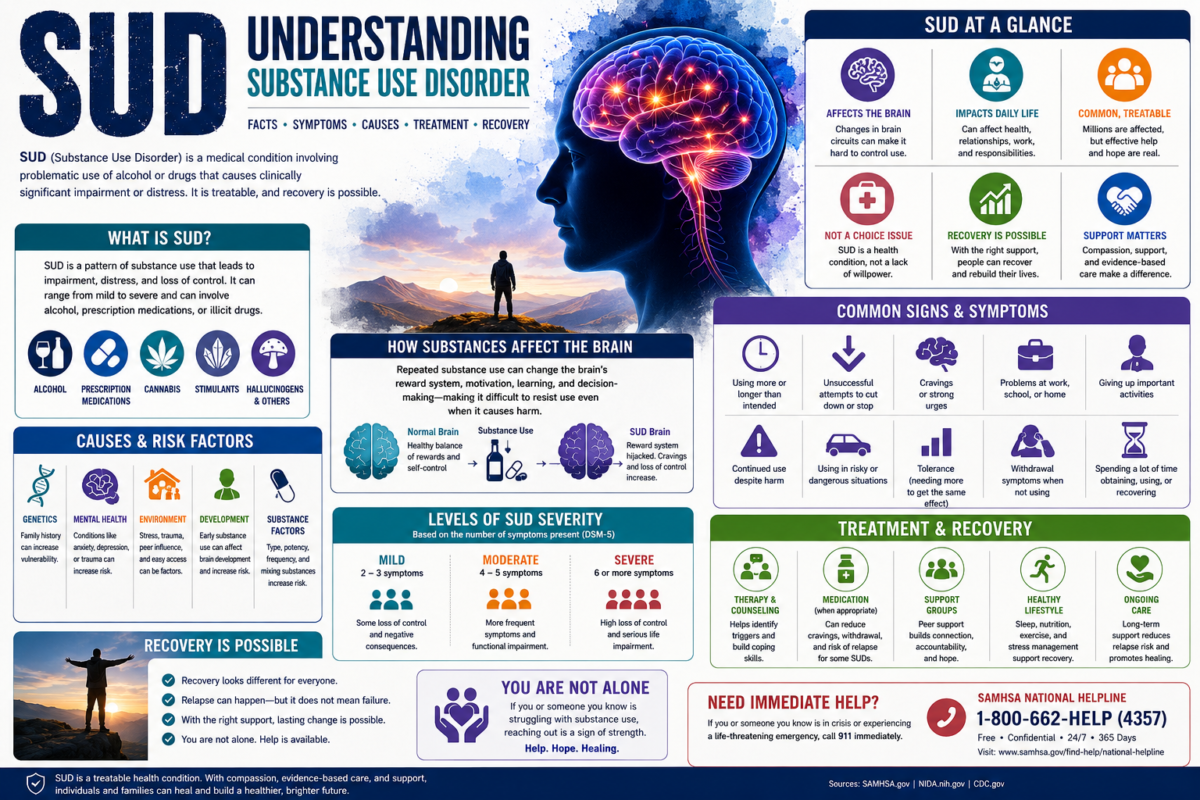
SUD stands for substance use disorder, a health condition involving problematic use of alcohol or drugs that can cause clinically significant impairment or distress. It can affect health, relationships, work, school, responsibilities, and everyday life. :contentReference[oaicite:0]{index=0}
Understanding SUD requires more than simply asking whether someone uses drugs or alcohol. Substance use by itself does not automatically mean that a person has a substance use disorder. Healthcare professionals look at patterns of use, loss of control, cravings, consequences, and other diagnostic criteria when evaluating whether a disorder is present. :contentReference[oaicite:1]{index=1}
SUD can range from mild to severe. The condition may involve alcohol, cannabis, opioids, stimulants, hallucinogens, sedatives, inhalants, tobacco, or other substances. Different substances can produce different patterns of symptoms, risks, and treatment needs.
This comprehensive guide explains SUD, including its meaning, symptoms, causes, risk factors, relationship with addiction and dependence, effects on the brain, diagnosis, treatment, recovery, relapse, and ways to support someone experiencing problematic substance use.
Table of Contents
- What Is SUD?
- What Does SUD Mean?
- Understanding Substance Use Disorder
- SUD vs. Addiction
- SUD vs. Dependence
- Common SUD Symptoms
- How SUD Can Affect the Brain
- Causes of SUD
- Risk Factors
- How SUD Is Diagnosed
- SUD Treatment
- Recovery and Long-Term Management
- Supporting Someone With SUD
- Frequently Asked Questions
What Is SUD?
What is SUD? SUD, or substance use disorder, is a condition characterized by problematic substance use that results in clinically significant impairment or distress. According to SAMHSA, substance use disorders can involve recurrent alcohol or drug use associated with health problems, disability, or difficulty fulfilling major responsibilities. :contentReference[oaicite:2]{index=2}
The condition exists on a spectrum. A person does not need to experience every possible symptom for a healthcare professional to identify a substance use disorder. Under DSM-5-based criteria, severity is determined by the number and pattern of qualifying symptoms.
This spectrum is important because SUD is not synonymous with the idea that someone has completely lost control of every aspect of their life. Someone can have a substance use disorder while still maintaining employment, relationships, or other responsibilities.
What Does SUD Mean?
The SUD meaning is simply substance use disorder. It is the clinical terminology used to describe problematic patterns of substance use rather than relying on older, broader labels such as “drug abuse.”
The terminology is important because substance-related problems can involve different levels of severity and different combinations of symptoms. Modern clinical frameworks therefore focus on the person’s pattern of use and its consequences.
SUD can involve alcohol as well as drugs. It can also occur with different categories of substances, including opioids, stimulants, cannabis, hallucinogens, sedatives, and other substances.
Understanding Substance Use Disorder
A central feature of SUD is that substance use becomes associated with meaningful impairment, distress, or difficulty controlling use.
For example, a person may repeatedly use a substance for longer than intended, make unsuccessful attempts to reduce use, experience strong cravings, or continue using despite knowing that it is causing physical, psychological, social, or occupational problems.
Other possible indicators include spending substantial amounts of time obtaining, using, or recovering from a substance; neglecting important activities; or repeatedly using a substance in situations where doing so creates physical danger. These are among the criteria used in DSM-5-based assessments. :contentReference[oaicite:3]{index=3}
SUD vs. Addiction
SUD and addiction are closely related terms, but they are not always interchangeable.
SUD is the broader clinical diagnosis. Addiction is commonly used to describe more severe patterns involving compulsive substance seeking and use despite harmful consequences. SAMHSA notes that not everyone with a substance use disorder experiences addiction in the same way or to the same degree. :contentReference[oaicite:4]{index=4}
This distinction matters because someone can have a substance use disorder without fitting the everyday image of what people commonly call an “addict.”
SUD vs. Dependence
Dependence is another concept that should not automatically be treated as synonymous with SUD.
Physical dependence can involve physiological adaptation to a substance, meaning that stopping or substantially reducing exposure can produce withdrawal symptoms. Tolerance can also occur, meaning that a person may require more of a substance to achieve an effect or experience a reduced effect from the same amount.
These physiological adaptations can occur with some medications when they are used appropriately under medical supervision. Therefore, dependence by itself does not establish that someone has a substance use disorder. :contentReference[oaicite:5]{index=5}
Common SUD Symptoms
The symptoms of SUD can involve behavior, thoughts, emotions, relationships, physical health, and everyday responsibilities.
Common diagnostic features can include taking a substance in larger amounts or for longer than intended, wanting to reduce or stop but being unable to do so, experiencing cravings, spending substantial time around substance use, and continuing use despite negative consequences. :contentReference[oaicite:6]{index=6}
Other signs may include problems fulfilling responsibilities, giving up important activities, experiencing recurring interpersonal difficulties related to use, using substances in physically hazardous situations, developing tolerance, or experiencing withdrawal under relevant circumstances.
Having one isolated behavior does not automatically establish SUD. A qualified healthcare professional evaluates the overall pattern and circumstances.
How SUD Can Affect the Brain
Repeated exposure to psychoactive substances can influence brain systems involved in reward, motivation, learning, decision-making, stress, and self-control.
These changes can contribute to cravings and make it difficult for some people to reduce or stop substance use even when they recognize that continued use is causing harm. SAMHSA describes addiction as involving brain changes that can make resisting intense cravings difficult. :contentReference[oaicite:7]{index=7}
However, describing SUD as a brain disorder does not mean that biology is the only factor involved. Genetics, environment, mental health, developmental factors, social circumstances, and the properties of the substance can all contribute to risk.
What Causes SUD?
There is no single cause of SUD. Substance use disorders generally develop through interactions among biological, psychological, social, environmental, and behavioral factors.
Some people may have greater biological or genetic vulnerability, while others may face environmental circumstances that increase exposure or reduce protective support. Mental health conditions, trauma, stress, and early exposure to substances can also contribute to risk.
Importantly, having a risk factor does not mean that someone will inevitably develop SUD. Risk factors increase vulnerability; they do not determine an individual’s future.
Risk Factors for SUD
Several factors can increase a person’s vulnerability to SUD. These factors do not guarantee that a substance use disorder will develop, but they can influence the likelihood of problematic substance use.
Genetic and Biological Factors
Genetics can influence how a person responds to substances and how vulnerable they may be to developing problematic patterns of use. Brain development, metabolism, and other biological characteristics can also contribute to individual differences.
Mental Health Factors
Depression, anxiety, trauma-related conditions, and other mental health difficulties can occur alongside SUD. Some people may use substances in an attempt to manage emotional distress, although substance use can ultimately worsen psychological or physical problems.
Environmental Factors
Family circumstances, social networks, availability of substances, economic conditions, stress, and exposure to substance use can all influence risk.
Age and Development
Adolescence and young adulthood are important developmental periods because the brain continues to mature during these years. Earlier exposure to substances can be associated with increased risk of later substance-related problems.
SUD and Mental Health
SUD can occur alongside mental health conditions, a situation sometimes described as a co-occurring disorder. The relationship can be complicated because substance use and mental health symptoms may influence each other.
For example, someone experiencing anxiety or depression may use a substance in an attempt to cope with distress. At the same time, repeated substance use can contribute to changes in mood, sleep, anxiety, cognition, or other aspects of mental health.
When substance use and mental health conditions occur together, comprehensive assessment is important because addressing only one problem may leave significant factors untreated.
Behavioral Signs of SUD
Behavioral changes can sometimes provide clues that a person is experiencing problematic substance use. These may include repeatedly attempting to cut down without success, spending substantial time obtaining or recovering from substance use, or continuing to use despite recurring problems.
A person may also begin neglecting hobbies, social activities, school, work, or other responsibilities that were previously important to them.
However, individual behavioral changes do not automatically establish SUD. Professional assessment considers the overall pattern, duration, consequences, and circumstances.
Physical Signs of SUD
Physical signs can vary significantly depending on the substance involved. Possible indicators include changes in sleep, appetite, energy, coordination, weight, or general physical health.
Some substances can produce tolerance or withdrawal after repeated exposure. Others may affect cardiovascular, neurological, respiratory, gastrointestinal, or other physiological systems.
Because different substances have different effects, there is no single physical symptom that identifies every case of SUD.
Psychological Signs of SUD
Psychological signs can include strong cravings, preoccupation with obtaining or using a substance, difficulty concentrating, changes in mood, irritability, anxiety, or emotional instability.
Some people may also experience distress when attempting to reduce their substance use. Again, these experiences should be evaluated within the broader pattern rather than interpreted as proof of a disorder by themselves.
Different Types of Substance Use Disorder
SUD can involve many different substances. Clinicians consider the specific substance involved because its pharmacology, risks, withdrawal characteristics, and treatment options can differ.
Substance-related disorders can involve alcohol, opioids, stimulants, cannabis, sedatives, hallucinogens, inhalants, tobacco, and other substances.
A person can also experience problems involving more than one substance. Multiple-substance use can make assessment and treatment more complex because different substances may interact or produce overlapping effects.
How Severe Is SUD?
Substance use disorder is generally understood as occurring along a spectrum rather than as a simple yes-or-no condition.
Under DSM-5-based diagnostic criteria, clinicians consider the number of relevant symptoms present over a specified period when determining severity. This approach allows professionals to distinguish between mild, moderate, and severe presentations.
This spectrum is important because people with SUD can have very different experiences and treatment needs. A person does not have to reach the most severe stage before professional support becomes appropriate.
How SUD Is Diagnosed
Diagnosis of SUD is performed by a qualified healthcare professional using a clinical assessment rather than a single laboratory test.
The assessment can examine substance-use patterns, cravings, attempts to control use, consequences, responsibilities, hazardous situations, tolerance, withdrawal, medical history, mental health, and other relevant factors.
Clinicians may also ask about prescription medications, alcohol, recreational substances, previous treatment, family history, and social circumstances to develop a more complete understanding of the person’s situation.
SUD Screening
Screening is different from diagnosis. A screening questionnaire can help identify whether someone may benefit from a more detailed evaluation, but a positive screening result does not necessarily establish a diagnosis.
Healthcare professionals may use validated screening instruments alongside interviews and other clinical information.
This distinction helps prevent self-diagnosis based on a single online quiz or isolated symptom.
SUD Treatment
Treatment for SUD can involve several approaches, and the most appropriate plan depends on the substance involved, severity, medical needs, mental health, living circumstances, and individual goals.
Treatment may include behavioral therapies, counseling, medications where appropriate, peer-support programs, residential treatment, outpatient care, or combinations of these approaches.
For some substance use disorders, medications can reduce cravings, withdrawal symptoms, or the risk of serious complications. Medication options vary substantially according to the substance involved.
Behavioral Treatment for SUD
Behavioral therapies can help people understand patterns of substance use, identify triggers, develop coping strategies, strengthen motivation for change, and build healthier routines.
Different therapeutic approaches may be appropriate for different individuals. Treatment can also address relationships, employment, housing, trauma, mental health, and other circumstances that influence recovery.
Effective care is therefore often broader than simply telling someone to stop using a substance.
Medications and SUD Treatment
Some forms of SUD can be treated with medications as part of a comprehensive care plan. Medication availability and recommendations depend on the substance involved and the individual’s medical circumstances.
For example, medications are an established component of treatment for opioid use disorder and can help reduce illicit opioid use, cravings, and overdose risk. Other substance use disorders have different treatment approaches.
Medication decisions should be made with qualified healthcare professionals because appropriate treatment depends on medical history, interactions, contraindications, and other individual factors.
Outpatient and Residential Treatment
SUD treatment can take place in different settings. Outpatient programs allow people to receive structured treatment while continuing many aspects of daily life, while residential programs provide a more intensive environment for people who need greater support.
The appropriate level of care depends on factors such as severity, safety, medical needs, withdrawal risk, living environment, and available support.
There is no single treatment setting that is appropriate for everyone experiencing SUD.
SUD Recovery and Long-Term Management
Recovery from SUD is not necessarily a single event or a short process. For many people, recovery involves ongoing changes in behavior, health, relationships, environment, and coping strategies.
The goals of recovery can differ between individuals. Some people focus on stopping substance use completely, while others may initially work with healthcare professionals on reducing immediate risks, stabilizing their health, and building the foundation for longer-term treatment.
Recovery can also involve addressing circumstances that contributed to problematic substance use, such as untreated mental health concerns, unstable housing, relationship difficulties, trauma, isolation, or chronic stress.
Relapse and SUD
Return to substance use can occur during recovery, but it does not mean that treatment has failed or that recovery is impossible.
SUD is a condition that can involve recurring patterns of use, and treatment plans may need to change as a person’s circumstances change. A return to use can provide important information about triggers, unmet needs, treatment effectiveness, or environmental pressures.
Healthcare professionals can help reassess the situation and modify treatment when necessary. Continuing to seek appropriate support is important rather than interpreting a setback as a reason to abandon recovery altogether.
Understanding Triggers
Triggers are situations, emotions, environments, people, memories, or other experiences that can increase cravings or make returning to substance use more likely.
Common examples can include stress, conflict, social pressure, exposure to substances, certain locations, loneliness, sleep problems, or difficult emotions.
Identifying individual triggers can help people and their treatment teams develop strategies for managing them. These strategies may include changing routines, strengthening social support, learning coping skills, addressing underlying mental health concerns, or avoiding particularly high-risk environments.
Supporting Someone With SUD
Supporting someone experiencing SUD can be challenging for family members, friends, partners, and colleagues. A supportive approach generally focuses on compassion, clear communication, and encouraging access to professional care.
It is important to avoid assuming that substance use is simply a matter of willpower. SUD can involve biological, psychological, and environmental factors, and people can experience significant difficulty changing established patterns of use.
At the same time, supporting someone does not require another person to ignore harmful behavior or place their own safety at risk. Healthy boundaries can be an important part of supporting both the individual and the people around them.
Family and Social Support
Social support can play an important role in recovery. Trusted family members, friends, peer-support communities, counselors, physicians, and other professionals can provide different forms of assistance.
Family members may also need support of their own. Living with or caring about someone experiencing SUD can create emotional, financial, and practical challenges.
Education can help families understand the difference between supporting recovery and attempting to control another person’s behavior.
SUD and Co-Occurring Conditions
Some people with SUD also experience mental or physical health conditions. When these problems occur together, they can influence one another and make treatment more complicated.
For example, depression, anxiety, trauma-related symptoms, chronic pain, or other health concerns may affect substance use patterns. Conversely, repeated substance use can contribute to changes in mood, sleep, cognition, and physical health.
Integrated care can help healthcare professionals consider substance use and other health concerns together rather than treating them as completely unrelated problems.
Preventing SUD
There is no guaranteed way to prevent every case of SUD, but prevention efforts can reduce risk and strengthen protective factors.
Education, healthy social connections, early identification of problematic substance use, access to mental healthcare, stable living conditions, and appropriate treatment can all play important roles.
Prevention is particularly important among adolescents because early exposure to substances can be associated with increased risk of later substance-related problems.
SUD and Overdose Risk
Some forms of substance use disorder can involve a significant risk of overdose, particularly when opioids or other substances capable of suppressing breathing are involved.
Overdose risk can be influenced by tolerance, substance potency, combinations of substances, changes in use patterns, and uncertainty about what a substance contains.
Because overdose can become life-threatening rapidly, recognizing an emergency and seeking immediate medical assistance is important when someone shows signs of severe poisoning or overdose.
Harm Reduction and SUD
Harm reduction refers to approaches designed to reduce the health and social consequences associated with substance use while recognizing that not everyone is immediately able or willing to stop using a substance.
Depending on the substance and situation, harm-reduction strategies can include overdose education, access to evidence-based treatment, infectious-disease prevention, safer environments, and connection with healthcare services.
Harm reduction does not mean encouraging substance use. It is a public-health approach that aims to reduce preventable injury and death while creating opportunities for people to access further support.
What Does Successful SUD Treatment Look Like?
There is no single definition of successful treatment for SUD that applies to every person. Outcomes can include reduced substance use, abstinence, improved physical and mental health, stronger relationships, improved functioning, and better quality of life.
Treatment goals may also change over time. Someone may initially need medical stabilization, followed by behavioral treatment and longer-term recovery support.
The most appropriate goals should be developed with qualified healthcare professionals based on the individual’s circumstances and needs.
SUD and Stigma
Stigma can make it harder for people experiencing SUD to seek help. Negative stereotypes may cause people to feel shame or fear judgment from family members, healthcare professionals, employers, or society.
Using accurate, nonjudgmental language can help shift conversations from blame toward health and treatment.
Recognizing SUD as a health condition does not remove personal responsibility, but it acknowledges that effective treatment may require more than willpower alone.
When Should Someone Seek Help for SUD?
Professional support can be appropriate whenever substance use is becoming difficult to control or is causing meaningful problems in a person’s health, relationships, work, education, finances, or daily responsibilities.
Someone does not need to wait until their situation becomes severe before seeking help.
Warning signs such as repeated unsuccessful attempts to stop, strong cravings, continued use despite serious consequences, dangerous use, or significant withdrawal concerns can all justify a professional assessment.
A healthcare professional can help determine whether SUD is present and discuss appropriate treatment or support options.
Building a Sustainable Recovery Plan
A sustainable recovery plan generally considers more than substance use itself. Sleep, nutrition, physical health, mental health, relationships, employment, housing, stress management, and social connection can all influence long-term outcomes.
Some people benefit from structured treatment, while others may need ongoing counseling, peer support, medication, or periodic medical follow-up.
The important principle is that recovery should be individualized. What works for one person may not be appropriate for another.
The Future of SUD Research
Research into SUD continues to examine the biological, psychological, and social factors that contribute to problematic substance use.
Researchers are investigating new medications, behavioral interventions, prevention strategies, digital health tools, and approaches for treating co-occurring conditions.
Better understanding of addiction biology and individual differences may also help healthcare professionals develop more personalized approaches to prevention and treatment.
Frequently Asked Questions About SUD
What does SUD stand for?
SUD stands for substance use disorder. It describes a pattern of alcohol or drug use that causes clinically significant impairment or distress and can affect health, relationships, responsibilities, or daily functioning.
What is SUD?
SUD is a health condition involving problematic substance use. It can range from mild to severe, and it can involve different substances, including alcohol, opioids, stimulants, cannabis, sedatives, hallucinogens, and others.
What are the symptoms of SUD?
Symptoms can include using a substance in larger amounts or for longer than intended, unsuccessful attempts to reduce use, strong cravings, spending substantial time obtaining or recovering from use, continuing despite harmful consequences, neglecting responsibilities, hazardous use, tolerance, and withdrawal when applicable.
Is SUD the same as addiction?
Not exactly. SUD is the clinical term for a substance use disorder, while addiction is commonly used to describe compulsive substance use despite harmful consequences. The terms are closely related, but they are not always interchangeable.
Is substance dependence the same as SUD?
No. Physical dependence can involve physiological adaptation to repeated exposure to a substance, including tolerance or withdrawal. Dependence can occur in some people taking medications appropriately and does not by itself establish a substance use disorder.
What causes SUD?
There is no single cause. SUD can develop through interactions among genetics, brain biology, mental health, stress, trauma, environmental circumstances, social influences, developmental factors, and characteristics of the substance itself.
Can mental health conditions and SUD occur together?
Yes. A person can experience SUD alongside conditions such as depression, anxiety, or trauma-related disorders. Substance use and mental health symptoms can influence each other, which is why comprehensive assessment can be important.
How is SUD diagnosed?
A qualified healthcare professional evaluates a person’s pattern of substance use and considers symptoms such as loss of control, cravings, consequences, hazardous use, tolerance, and withdrawal. Diagnosis is based on clinical criteria rather than a single laboratory test.
Can SUD be treated?
Yes. Evidence-based treatment can include behavioral therapies, counseling, medications for certain substance use disorders, peer support, outpatient care, residential treatment, or combinations of these approaches.
Does SUD treatment always require residential rehab?
No. Treatment can occur in different settings. Some people benefit from outpatient services, while others require more intensive residential or medically supervised care. The appropriate level depends on the person’s clinical and social circumstances.
Can someone recover from SUD?
Yes. Recovery is possible, although the process differs between individuals. Treatment and long-term support can help people reduce or stop problematic substance use, improve health, strengthen relationships, and build sustainable routines.
Does relapse mean SUD treatment failed?
No. A return to substance use can occur during recovery and may indicate that a treatment plan needs to be reassessed or strengthened. It does not mean that future recovery is impossible.
How can I support someone with SUD?
Support can include listening without judgment, encouraging professional treatment, helping the person connect with appropriate services, and maintaining healthy boundaries. Friends and family members should also protect their own physical and emotional wellbeing.
When should someone seek professional help for SUD?
Professional help can be appropriate when substance use becomes difficult to control or begins causing problems with health, relationships, work, education, finances, or everyday responsibilities. Someone does not need to wait until the situation becomes severe before seeking an assessment.
Conclusion
SUD, or substance use disorder, is a complex health condition that can affect people in different ways and at different levels of severity. It is not simply a matter of whether someone uses a substance; the overall pattern of use and its consequences are central to understanding the condition.
Genetics, brain biology, mental health, trauma, environment, social circumstances, and substance characteristics can all contribute to vulnerability. These factors can interact differently from person to person, which is why treatment should be individualized.
Modern approaches to SUD can include behavioral therapies, counseling, medications for certain disorders, peer support, and different levels of clinical care. Recovery is possible, and a setback does not automatically mean that treatment has failed.
Perhaps most importantly, understanding SUD through accurate, nonjudgmental information can make it easier to recognize problematic substance use and encourage people to seek appropriate professional support.
Related Educational Topics
- Psychedelics for Beginners
- Beginner Guide to Psychedelics
- What Are Hallucinogens? Types, Effects, Risks & Research
Further Reading
