
Aug
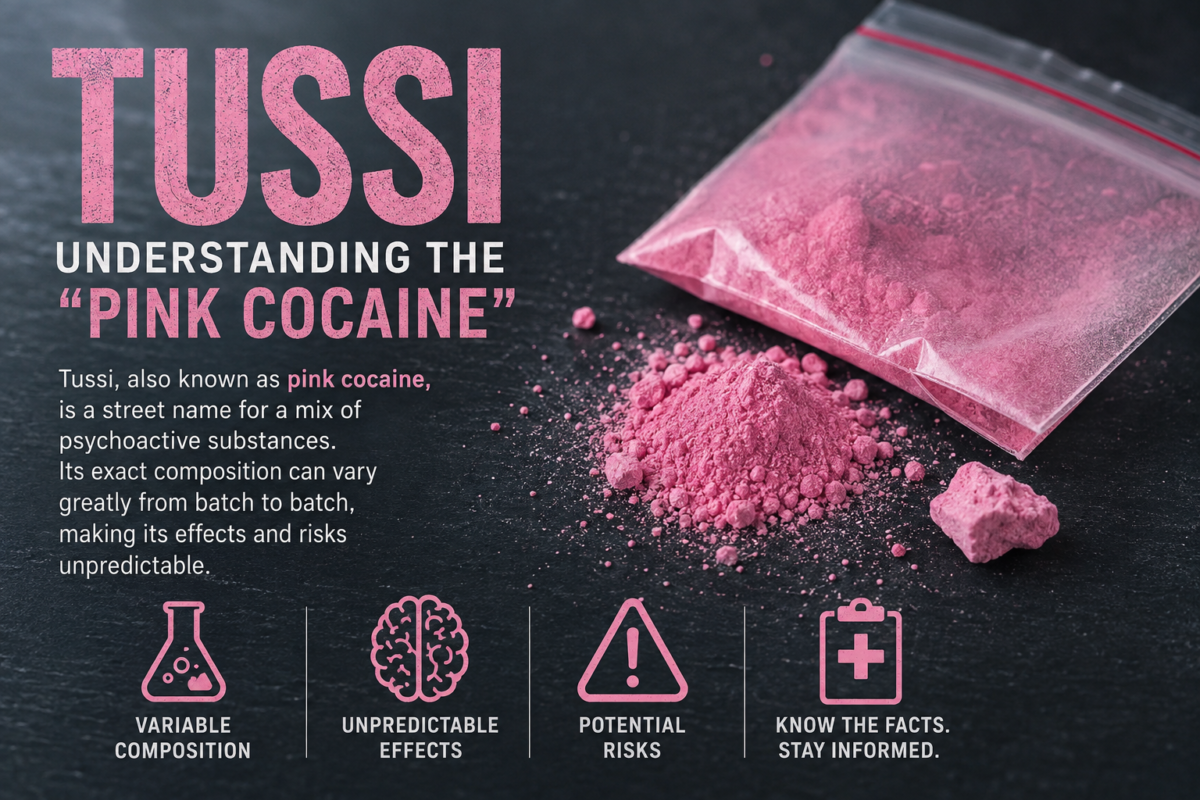
Tussi is a street name associated with a drug mixture commonly known as tusi, tuci, tucibí, or “pink cocaine.” Despite the name, modern tussi products are generally not a single standardized drug, and they usually are not simply cocaine. Laboratory testing and drug-checking programs have found that tusi commonly contains ketamine and MDMA, while other samples have contained substances such as cocaine, methamphetamine, synthetic cathinones, caffeine, opioids, or other drugs.
This variable composition is one of the most important things to understand about tussi. Two products sold under the same name may contain different substances and different concentrations. As a result, the effects and health risks can be difficult to predict from the product’s name, color, or appearance alone.
The term “pink cocaine” can also create confusion. Although some samples may contain cocaine, modern tusi is more accurately described as a variable mixture of psychoactive substances rather than a particular form of cocaine. Recent reviews of drug-checking and toxicology data emphasize that ketamine and MDMA are among the substances most commonly detected in contemporary tusi samples. Recent review of tusi composition and associated risks.
What Is Tussi?
Tussi is a spelling variation of tusi, a name used for a recreational drug mixture that has become increasingly visible in nightlife settings. Other names include tuci, tucci, tucibí, tusibí, and pink cocaine.
Unlike a pharmaceutical medication with a fixed active ingredient, tussi does not have one universal chemical formula. Its composition can change between batches, locations, and suppliers. This means that the same name can describe substantially different mixtures.
Research published in the scientific literature has found that tusi commonly contains ketamine, often alongside MDMA, while other substances may also be present. The exact composition is therefore an important part of understanding its potential effects and risks.
This also explains why information about one sample cannot necessarily be applied to every product sold as tussi.
What Does Tussi Mean?
The word tussi is one of several spellings used for tusi. Other variations include tuci, tucci, tucibí, and tusibí. These names are connected to the pronunciation of “2C” or “2C-B,” which has contributed to considerable confusion about what the drug actually contains.
Modern tusi should not automatically be assumed to contain 2C-B. Studies of drug samples have found that 2C-B is rarely detected in contemporary tusi, despite the association created by the name.
This distinction is important because a person searching for information about tussi may encounter descriptions that incorrectly present it as a single psychedelic compound. Current evidence instead describes it as a variable drug mixture.
Is Tussi the Same as Tusi?
In most drug-related contexts, tussi and tusi refer to the same general drug mixture. “Tussi” is simply one of the spelling variations used for tusi.
Other spellings include tuci, tucci, tucibí, and tusibí. Because these names are used inconsistently, the name alone cannot establish which substances are actually present in a particular sample.
Recent research specifically identifies “tussi” as one of the alternative spellings associated with tusi. Scientific review of tusi and its changing composition.
Why Is Tussi Called Pink Cocaine?
The term “pink cocaine” comes from the distinctive pink appearance of many tusi products and the belief that they are related to cocaine. However, the nickname can be misleading.
Modern tusi samples often contain ketamine and MDMA rather than cocaine. Cocaine has been detected in some samples, but it is not consistently present. Other substances can also appear in the mixture.
The pink color itself does not establish what is contained in a sample. Dyes and other ingredients can give the powder its characteristic appearance, meaning that color is not a reliable indication of chemical composition.
For that reason, calling tussi “pink cocaine” without explaining its variable composition can create a misleading impression about what the substance actually is.
What Is Actually in Tussi?
There is no single ingredient list that applies to every sample of tussi. Drug-checking programs and laboratory analyses have identified mixtures containing ketamine and MDMA, while other samples have contained stimulants, cocaine, methamphetamine, synthetic cathinones, caffeine, opioids, and other substances.
A 2025 review of tusi research found that ketamine and MDMA are commonly detected, but additional substances can vary considerably. This variability means that the contents of a particular sample cannot safely be inferred from its name or appearance.
The uncertainty is particularly important because combining several psychoactive substances can produce effects that differ from those associated with each individual drug.
Is Tussi Really Cocaine?
Tussi is not simply another name for cocaine. Although cocaine can sometimes be detected in tusi samples, modern tusi is generally understood as a mixture of multiple psychoactive substances rather than a standardized cocaine product.
The name “pink cocaine” is therefore better understood as a street name than as an accurate description of the chemical contents.
This distinction matters because someone expecting cocaine could unknowingly be exposed to ketamine, MDMA, or other substances instead. The resulting effects may therefore be very different from what the person expected.
What Are the Effects of Tussi?
The effects of tussi depend heavily on what substances are present in a particular mixture. Reported experiences can include euphoria, altered perception, disinhibition, dizziness, confusion, hallucinations, nausea, vomiting, and impaired coordination.
Because tusi can contain both stimulant and dissociative substances, different components may produce different effects at the same time. This can make the overall experience difficult to predict.
Research on tusi has documented a broad range of reported effects and emphasizes that the risks can stem from the combination of substances rather than from one ingredient alone.
Why Are Tussi Effects Unpredictable?
The main reason tussi effects are difficult to predict is that there is no standardized formula. Samples sold under the same name can contain different substances, different concentrations, or combinations of several psychoactive drugs.
Recent epidemiological research describes tusi as a drug mixture with an inconsistent chemical makeup. Drug-checking services have found substantial variation between samples, while users may not know which substances or quantities are present.
This means that a previous experience with one tussi sample does not reliably predict the effects of another sample.
Why Tussi Can Carry Serious Risks
The combination of multiple psychoactive substances can place stress on several systems in the body. Depending on the substances present, potential problems can involve the brain, heart, breathing, temperature regulation, coordination, and consciousness.
Reports involving tusi have included confusion, vomiting, hallucinations, loss of reflexes, and temporary unconsciousness. More serious combinations involving stimulants and dissociative drugs may increase cardiovascular and neurological risks.
The unpredictability of tussi therefore represents a significant part of its risk profile. A person cannot reliably determine the contents or potency simply by looking at the powder.
Related Drug Education
Understanding tussi also benefits from understanding other substances that may appear in discussions about drug mixtures. For broader information about MDMA, see our article Molly: Understanding Its Meaning, Effects, Risks, and History.
For information about another unpredictable synthetic drug category, read What Is K2? Understanding Spice, Effects, Risks, and Science.
People researching patterns of problematic substance use may also find our guide to Substance Use Disorder useful.
The Most Important Thing to Know About Tussi
The most important fact about tussi is that the name does not identify a single chemical substance. It refers to a changing mixture whose contents can differ from one sample to another.
Although the powder is commonly associated with the term “pink cocaine,” modern research indicates that cocaine is not consistently present and that ketamine and MDMA are among the substances most frequently detected.
That uncertainty makes it difficult to predict the effects of a particular sample and is an important reason why tussi should not be treated as a standardized or predictable drug.
Short-Term Effects of Tussi
The short-term effects of tussi can vary significantly because the substance is not produced according to one standardized formula. Depending on what a particular sample contains, a person may experience changes in mood, perception, energy, coordination, or awareness.
Possible short-term effects include euphoria, increased sociability, altered perception, dizziness, confusion, impaired coordination, nausea, vomiting, anxiety, agitation, hallucinations, and changes in heart rate.
The combination of several psychoactive substances can also make the overall experience difficult to predict. Effects associated with ketamine, MDMA, stimulants, or other substances may occur together or influence one another.
Physical Effects of Tussi
Tussi can produce a range of physical effects depending on its chemical composition. Some people may experience dizziness, nausea, vomiting, sweating, impaired balance, changes in body temperature, or an elevated heart rate.
More serious reactions can occur when a mixture contains potent stimulants, dissociative substances, or other drugs. Severe changes in consciousness, cardiovascular problems, seizures, or dangerous overheating can require urgent medical attention.
Because the contents of a particular sample may be unknown, it is difficult to predict which physical effects will occur.
Psychological Effects of Tussi
The psychological effects of tussi can include euphoria, heightened sensory experiences, altered perception, confusion, anxiety, paranoia, agitation, and hallucinations.
Some of these effects may be influenced by MDMA or other stimulant-like substances, while dissociative compounds such as ketamine can produce changes in perception and awareness.
Combining substances can make psychological reactions more complicated and can increase the difficulty of predicting how someone will respond.
Can Tussi Cause Hallucinations?
Yes. Hallucinations or substantial changes in perception can occur after exposure to tussi, particularly when a sample contains substances capable of producing psychedelic, dissociative, or stimulant-related effects.
A person experiencing hallucinations may have difficulty distinguishing their perceptions from what is actually happening around them. Severe confusion, extreme agitation, or dangerous behavior should be taken seriously.
Persistent or severe hallucinations following suspected drug exposure warrant professional medical evaluation.
Tussi and Ketamine
Ketamine has frequently been detected in contemporary tussi samples. Ketamine is a dissociative anesthetic that can produce changes in perception, awareness, coordination, and the sense of connection with the surrounding environment.
When ketamine is combined with other psychoactive substances, the resulting effects may be different from those expected from ketamine alone. Sedation, impaired coordination, confusion, and altered consciousness can become particularly concerning when additional depressant substances are involved.
The presence of ketamine in a sample also helps explain why describing tussi simply as “pink cocaine” can be misleading.
Tussi and MDMA
MDMA is another substance that has commonly been detected in tussi samples. MDMA can affect mood, perception, energy, and physiological processes such as heart rate and body temperature.
When MDMA is combined with other substances, the overall effects can become less predictable. The risks associated with a mixture cannot necessarily be determined by considering each ingredient separately.
For additional background, our Molly guide discusses MDMA, its meaning, effects, and associated risks.
Is Tussi the Same as 2C-B?
No. Although the names tusi and tucibí have historically been associated with 2C-B, modern tussi products should not automatically be assumed to contain 2C-B.
Contemporary laboratory analyses have frequently identified other substances, particularly ketamine and MDMA, instead. This is an important example of why the street name of a drug does not reliably establish its chemical contents.
A person should therefore not assume that a product marketed as tussi has the pharmacological properties of 2C-B.
Tussi vs Cocaine
Tussi and cocaine are not interchangeable terms. Cocaine is a specific stimulant drug, whereas tussi describes a variable mixture that can contain several different psychoactive substances.
Some tussi samples have contained cocaine, but cocaine is not consistently present. Other samples may contain ketamine, MDMA, stimulants, or additional compounds instead.
This distinction is particularly important because someone expecting the effects of cocaine could instead be exposed to a combination with very different properties.
Can Tussi Cause an Overdose?
Severe poisoning can occur after exposure to a mixture sold as tussi. The possibility of serious toxicity is increased by the uncertainty surrounding the contents and concentrations of individual samples.
A dangerous reaction can involve severe confusion, loss of consciousness, seizures, breathing difficulties, serious cardiovascular symptoms, extreme agitation, or dangerous changes in body temperature.
The term “overdose” does not identify one particular mechanism because the substances responsible for the reaction can vary from sample to sample.
Why Mixing Substances Makes Tussi More Difficult to Predict
Many tussi samples contain more than one psychoactive substance. Each compound can have its own effects, while the combination can create additional risks.
For example, a mixture containing a dissociative drug and a stimulant may affect consciousness, coordination, heart rate, and perception at the same time. The resulting experience may therefore be substantially different from what someone expects based on one ingredient.
This is one of the central safety concerns surrounding tussi: the user may not know what substances are present or how they will interact.
Tussi and Mental Health
Changes in perception and mood can make tussi particularly concerning for people who experience anxiety, panic, paranoia, or other mental health symptoms.
Severe intoxication can involve confusion, agitation, paranoia, or hallucinations. In some circumstances, these effects can lead to unsafe behavior or make it difficult for someone to recognize that they need assistance.
Anyone experiencing persistent or severe psychiatric symptoms following substance exposure should be evaluated by a qualified healthcare professional.
Can Tussi Be Addictive?
The possibility of problematic use depends partly on the substances contained in a particular tussi mixture. Because different samples can contain different drugs, there is no single dependence profile that applies to every product sold under the name.
Warning signs of problematic substance use can include repeatedly seeking the drug, difficulty controlling use, continuing despite negative consequences, and experiencing significant disruption to work, relationships, or daily responsibilities.
Anyone struggling with repeated substance use can speak with a healthcare professional or qualified substance-use specialist for appropriate support.
Signs of a Dangerous Tussi Reaction
Some symptoms following suspected tussi exposure require urgent medical attention. Warning signs can include:
- Difficulty breathing
- Loss of consciousness
- Seizures
- Severe confusion or delirium
- Extreme agitation or dangerous behavior
- Severe chest pain
- Very rapid or irregular heartbeat
- Severe overheating
- Persistent vomiting accompanied by serious symptoms
- Severe hallucinations or loss of contact with reality
When a serious reaction occurs, healthcare professionals should be told that a substance sold as tussi may have been involved if that information is known. Because the actual ingredients may be uncertain, this information can be clinically relevant.
Tussi Safety: What to Remember
The most important safety issue with tussi is its unpredictable composition. The same street name can refer to mixtures containing different substances, meaning that appearance, color, packaging, or previous experience cannot reliably establish what a particular sample contains.
Contemporary research has identified ketamine and MDMA among frequently detected substances, but other drugs can also occur. This variability is why tussi should not be treated as a standardized form of cocaine, 2C-B, or any other single drug.
Severe or unexpected symptoms following suspected exposure should be taken seriously, particularly when consciousness, breathing, heart function, temperature regulation, or mental status is affected.
Related Reading
For information about MDMA and the terminology surrounding it, read our Molly article.
For information about another unpredictable drug category, see What Is K2?.
For broader information about problematic substance use and its symptoms, read our SUD guide.
Why the Composition of Tussi Changes
One of the defining characteristics of tussi is that it does not have a fixed chemical formula. Products sold under the same name can contain different psychoactive substances, and the mixture can change over time.
This is partly connected to changes in the illicit drug market. When particular substances become controlled or less available, other compounds may appear in their place. As a result, the name on a package may remain familiar even though the actual chemical contents have changed.
Research into tusi has repeatedly demonstrated this variability, making it difficult to predict the effects or risks of a particular sample based solely on its name.
What Drug Testing Has Found in Tussi
Laboratory analysis and drug-checking programs have found a range of substances in samples sold as tussi. Ketamine and MDMA have been frequently reported, while other samples have contained cocaine, methamphetamine, synthetic cathinones, caffeine, opioids, or other psychoactive compounds.
The proportions can also differ between samples. One product may contain a predominantly dissociative mixture, while another may contain stimulant-type substances or several different compounds.
This means that the street name “tussi” provides very limited information about the actual pharmacological properties of a particular sample.
Does the Pink Color Mean Anything?
The pink appearance associated with tussi is largely a feature of how the product is presented rather than a reliable indicator of its chemical contents.
A pink powder can contain different substances from another pink powder sold under the same name. Color, texture, smell, and packaging cannot establish the identity or concentration of the active chemicals.
This is why the term “pink cocaine” should not be interpreted as a chemical description. It is primarily a street name associated with the appearance and marketing of the product.
Can Tussi Effects Vary From One Experience to Another?
Yes. Because tussi is a variable mixture, experiences can differ substantially between occasions.
A person may encounter a product containing a different combination of substances from one occasion to another. Even when the same substances are present, their concentrations may differ.
Previous experience therefore cannot reliably establish how another sample will affect someone. This unpredictability is an important distinction between tussi and regulated medications with standardized ingredients and manufacturing controls.
How Long Do Tussi Effects Last?
There is no universal duration for tussi because the mixture can contain different substances. The duration of effects depends on which compounds are present, their concentrations, individual metabolism, and other factors.
Different components can also have different timelines. A stimulant-like substance, dissociative drug, or other psychoactive compound may produce effects that begin, peak, and diminish at different times.
For this reason, an exact duration should not be assumed from the name “tussi” alone.
Can Tussi Cause Effects After the Main Experience?
Some people may experience residual effects after the strongest effects of tussi have declined. These can include tiredness, confusion, difficulty concentrating, mood changes, dizziness, or other symptoms depending on the substances involved.
Residual effects can be particularly concerning if a person believes that feeling less intoxicated means they have completely recovered. Impairment can sometimes continue after the most obvious effects have faded.
Tussi and Alcohol
Combining tussi with alcohol can increase unpredictability because the mixture itself may already contain several psychoactive substances.
Alcohol can affect coordination, judgment, consciousness, and other central nervous system functions. If a tussi sample contains sedating or dissociative substances, the combined effects may become more concerning.
Because the ingredients of a particular tussi sample may be unknown, there is no reliable way to predict the result of combining it with alcohol or another drug.
Tussi With Other Drugs
Combining tussi with additional substances introduces another layer of uncertainty. A sample may already contain multiple psychoactive compounds before another drug is added.
Interactions can affect consciousness, heart rate, blood pressure, body temperature, coordination, and mental state. The risks can be particularly difficult to predict when the ingredients of the original mixture are unknown.
This is one reason medical professionals need as much information as possible about suspected substance exposure when treating someone with severe symptoms.
Tussi and Mental Health Risks
Changes in perception and consciousness can produce significant psychological effects. Depending on its composition, tussi may be associated with anxiety, panic, paranoia, confusion, hallucinations, agitation, or other disturbances in thinking and perception.
People who experience severe psychiatric symptoms after taking an unknown drug mixture may need professional evaluation. Symptoms such as persistent hallucinations, severe paranoia, extreme confusion, or dangerous behavior should not simply be assumed to be part of an ordinary recreational experience.
Possible Signs of a Serious Tussi Reaction
Because the chemical contents can vary, serious reactions can take different forms. Warning signs can include:
- Loss of consciousness
- Difficulty breathing
- Seizures
- Severe confusion or delirium
- Extreme agitation
- Severe chest pain
- Very rapid or irregular heartbeat
- Dangerously high body temperature
- Persistent or severe vomiting
- Severe hallucinations or psychotic symptoms
These symptoms can indicate a medical emergency. If they occur following suspected tussi exposure, urgent medical assistance should be sought.
When Tussi Exposure Requires Emergency Help
Emergency evaluation is particularly important when someone becomes unconscious, has difficulty breathing, experiences a seizure, develops severe chest pain, or becomes extremely confused or agitated.
If the substance is available and can be safely identified, information about the product can be useful to healthcare professionals. However, a person should never delay emergency treatment while attempting to determine exactly what was contained in an unknown mixture.
The fact that a product is sold under a familiar name does not mean that its chemical contents are known or consistent.
Signs of Problematic Tussi Use
Because tussi can contain different drugs, patterns of problematic use can vary. General warning signs include repeatedly seeking the substance, difficulty controlling use, continuing despite harmful consequences, and experiencing disruption to work, relationships, finances, or daily responsibilities.
Someone who feels unable to stop using an unpredictable drug mixture can speak with a healthcare professional or substance-use specialist. Support can address both the substance use itself and any underlying issues contributing to continued use.
Why the Name Matters Less Than the Contents
When discussing tussi, the most useful distinction is between the street name and the actual chemical exposure.
Tussi, tusi, tuci, tucibí, and pink cocaine are names that can point toward the same general drug category, but they do not guarantee a particular chemical composition. The actual contents determine the pharmacological effects and many of the associated risks.
This is why modern research focuses heavily on laboratory analysis and drug-checking data rather than relying on street names alone.
P3 Summary
Tussi is best understood as a variable drug mixture rather than a single standardized substance. Its contents can change between samples, and commonly detected substances include ketamine and MDMA, with other drugs also reported.
The pink color and the nickname “pink cocaine” do not reliably identify what is in the product. Likewise, a previous experience with tussi cannot reliably predict the effects of another sample.
This uncertainty is central to understanding the risks associated with tussi and explains why severe or unexpected reactions should be treated seriously.
Frequently Asked Questions About Tussi
What is Tussi?
Tussi is a spelling variation of tusi, a street drug name associated with mixtures of psychoactive substances. It is also known as tuci, tucibí, and “pink cocaine.” Modern samples do not have one standardized chemical composition.
What does Tussi mean?
Tussi is one of several names used for tusi. The terms can refer to a variable drug mixture rather than a single pharmaceutical or chemical substance.
Is Tussi the same as Tusi?
In most drug-related contexts, yes. Tussi is a spelling variation of tusi. Other variations include tuci, tucci, tucibí, and tusibí.
Why is Tussi called pink cocaine?
The nickname “pink cocaine” is associated with the pink appearance of many tusi products and their history of being marketed under that name. The term can be misleading because modern tusi is not necessarily cocaine and often contains other psychoactive substances.
Does Tussi contain cocaine?
Some samples sold as tussi have contained cocaine, but cocaine is not consistently present. Laboratory analyses have found a range of different substances in samples sold under the same general name.
What is usually found in Tussi?
Contemporary research has frequently identified ketamine and MDMA in tusi samples. Other substances, including stimulants, cocaine, synthetic cathinones, caffeine, opioids, and other psychoactive compounds, have also been reported.
Is Tussi the same as 2C-B?
No. Although the history and naming of tusi have been associated with 2C-B, modern tusi products should not automatically be assumed to contain 2C-B. Laboratory testing has frequently identified other substances instead.
What are the effects of Tussi?
The effects depend on what a particular sample contains. Reported effects can include euphoria, altered perception, dizziness, confusion, impaired coordination, nausea, vomiting, anxiety, hallucinations, and changes in heart rate.
Can Tussi cause hallucinations?
Yes. Hallucinations and other changes in perception can occur after exposure to tussi, depending on the substances present in the mixture.
Can Tussi cause anxiety or paranoia?
Yes. Anxiety, panic, paranoia, confusion, and agitation can occur following exposure to a mixture sold as tussi. Severe or persistent psychological symptoms should be evaluated by a healthcare professional.
How long do Tussi effects last?
There is no single timeline for tussi because its chemical composition can vary. The duration depends on the substances present, their concentrations, and individual factors.
Can Tussi be addictive?
Problematic use and dependence can occur with some of the substances that may be present in tussi. Because the composition varies, there is no single dependence profile that applies to every sample.
Can you overdose on Tussi?
Severe poisoning can occur after exposure to a mixture sold as tussi. Serious reactions can include seizures, loss of consciousness, difficulty breathing, severe agitation, cardiovascular problems, dangerous overheating, and severe changes in mental status.
What are the signs of a dangerous Tussi reaction?
Warning signs include difficulty breathing, loss of consciousness, seizures, severe confusion, extreme agitation, serious chest pain, very rapid or irregular heartbeat, dangerous overheating, and severe hallucinations or psychotic symptoms.
What should you do if someone has a severe reaction to Tussi?
Severe symptoms should be treated as a potential medical emergency. Emergency medical assistance should be sought for symptoms such as seizures, unconsciousness, difficulty breathing, severe chest pain, or extreme confusion or agitation.
Is the pink color a reliable indication of what Tussi contains?
No. The color or appearance of a tussi product cannot establish its chemical composition. Different samples with a similar appearance can contain substantially different substances.
Key Takeaways About Tussi
- Tussi is a spelling variation of tusi and is also associated with names such as tuci, tucibí, and pink cocaine.
- It is not one standardized chemical substance.
- Modern samples can contain multiple psychoactive substances.
- Ketamine and MDMA are among the substances frequently identified in contemporary samples.
- Cocaine may be present in some samples but is not consistently found.
- Tussi should not automatically be assumed to contain 2C-B.
- The pink color does not reliably indicate the contents of a sample.
- Effects can vary substantially because the chemical composition can change.
- Severe reactions can involve neurological, cardiovascular, respiratory, or psychological complications.
- Severe or unexpected symptoms following suspected exposure require appropriate medical attention.
Conclusion
Tussi is best understood as a variable drug mixture rather than a single standardized substance. Although it is frequently called “pink cocaine,” that nickname does not accurately describe every sample. Contemporary testing has identified substances such as ketamine and MDMA, while other samples have contained cocaine, stimulants, synthetic cathinones, opioids, or additional compounds.
This changing composition is central to understanding tussi. The same street name can describe mixtures with substantially different effects and risks. The color, appearance, packaging, or name of a product cannot reliably establish what chemicals are actually present.
Reported effects can include altered perception, euphoria, confusion, impaired coordination, anxiety, hallucinations, nausea, and changes in heart rate. More serious reactions can involve seizures, loss of consciousness, severe psychiatric symptoms, cardiovascular complications, breathing problems, or dangerous changes in body temperature.
Anyone experiencing severe or unexpected symptoms following suspected exposure should seek appropriate medical attention. The most important fact to remember is that the name tussi does not guarantee a particular chemical composition or predictable effect.
Related Reading
For additional information about MDMA and the term Molly, read Molly: Understanding Its Meaning, Effects, Risks, and History.
For information about synthetic cannabinoid products, see What Is K2? Understanding Spice, Effects, Risks, and Science.
For a broader discussion of problematic substance use, read SUD: Understanding Substance Use Disorder, Symptoms, Causes, and Recovery.
Authoritative References
- Scientific review of tusi and its changing chemical composition
- Recent research on tusi composition and associated risks
Medical Disclaimer
This article is provided for general educational and informational purposes only. It is not a substitute for professional medical advice, diagnosis, or treatment. Tussi products can contain different psychoactive substances, and their composition may be unknown. Anyone experiencing severe or concerning symptoms following suspected exposure should seek appropriate medical attention.
