
Aug
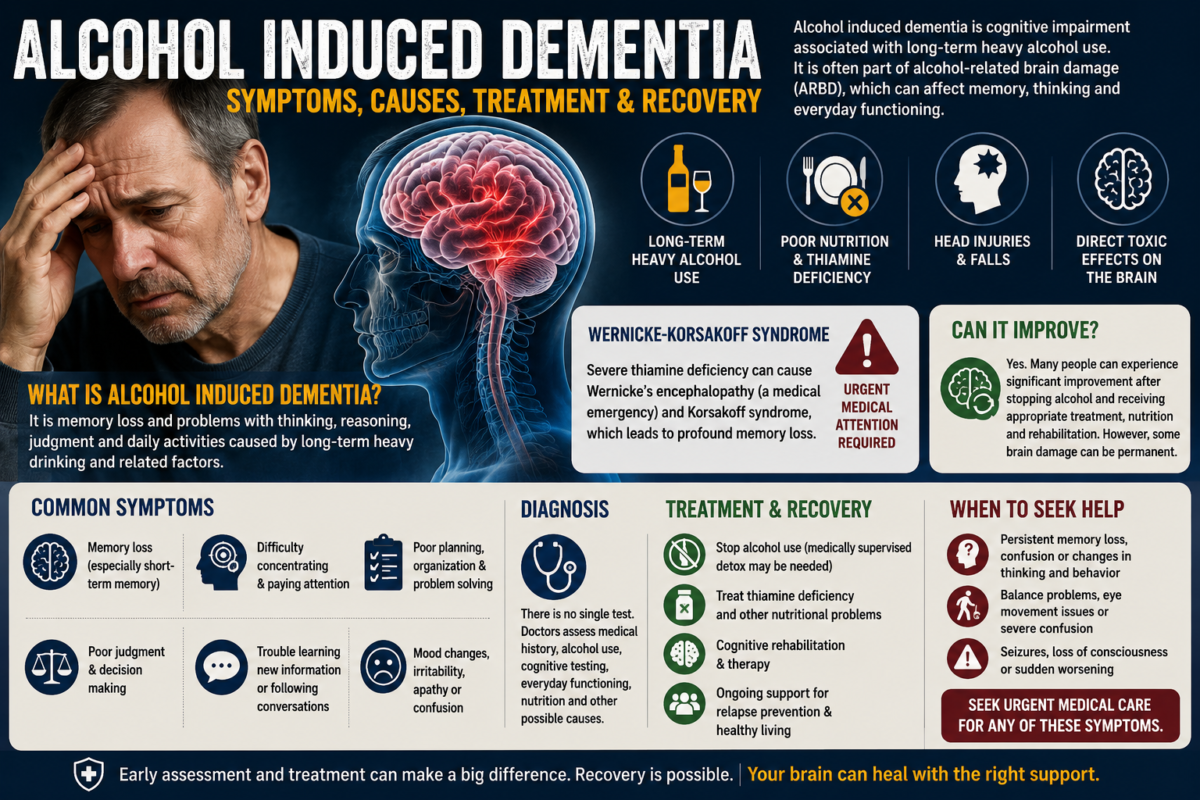
Alcohol induced dementia is a term commonly used to describe significant problems with memory, thinking, reasoning, and everyday functioning associated with long-term heavy alcohol use. However, health professionals often use the broader term alcohol-related brain damage (ARBD) because these conditions are not necessarily the same as progressive dementias such as Alzheimer’s disease.
Alcohol-related brain damage can develop through several pathways, including the direct effects of long-term heavy alcohol use, nutritional deficiencies, repeated withdrawal episodes, traumatic brain injuries, and conditions such as Wernicke-Korsakoff syndrome. The severity can range from relatively mild cognitive difficulties to problems that make independent living difficult.
One important distinction is that ARBD does not always follow the progressive course associated with common forms of dementia. Current clinical guidance states that early identification, appropriate treatment, and sustained abstinence can give many people an opportunity for meaningful cognitive improvement. :contentReference[oaicite:0]{index=0}
What Is Alcohol Induced Dementia?
Alcohol induced dementia is a commonly used description for cognitive impairment associated with prolonged heavy alcohol consumption. Affected abilities can include memory, attention, reasoning, planning, organization, and the ability to manage everyday activities.
The terminology can be confusing because “alcohol-related dementia” is not considered a distinct progressive dementia diagnosis in the same way as Alzheimer’s disease. Alzheimer’s Society describes alcohol-related brain damage as a form of brain injury that can produce symptoms resembling dementia. :contentReference[oaicite:1]{index=1}
Alcohol-related brain damage is better understood as a spectrum. Some people have relatively mild cognitive problems, while others develop severe difficulties with memory, judgment, communication, coordination, and independent living.
Alcohol-Induced Dementia vs Alcohol-Related Brain Damage
The phrase alcohol induced dementia can be useful when discussing the topic in everyday language, but alcohol-related brain damage is a broader and more clinically useful term.
Current UK clinical guidance defines ARBD as an umbrella term covering several psychoneurological and cognitive conditions associated with long-term heavy alcohol use and related vitamin deficiencies, particularly thiamine deficiency. These can include Wernicke-Korsakoff syndrome, alcohol-related traumatic brain injury, cognitive impairment associated with repeated withdrawal, and vascular brain injury. :contentReference[oaicite:2]{index=2}
This distinction matters because not every person with alcohol-related cognitive impairment has the same underlying condition or the same potential for recovery.
How Does Alcohol Damage the Brain?
Long-term heavy alcohol consumption can affect brain structure and function in several ways. Alcohol can have direct toxic effects on the brain, while heavy drinking can also contribute to poor nutrition and deficiencies of essential vitamins.
Thiamine, also known as vitamin B1, is particularly important. Severe thiamine deficiency can result in Wernicke’s encephalopathy and, if inadequately treated, can contribute to Wernicke-Korsakoff syndrome and lasting neurological damage. :contentReference[oaicite:3]{index=3}
Alcohol can also contribute indirectly to brain injury through falls, head injuries, liver disease, repeated withdrawal episodes, and other medical complications associated with heavy drinking.
What Causes Alcohol Induced Dementia?
There is no single mechanism behind every case of alcohol induced dementia. Alcohol-related brain damage can result from several interacting factors.
- Long-term heavy alcohol consumption
- Direct toxic effects of alcohol on the brain
- Thiamine and other nutritional deficiencies
- Wernicke’s encephalopathy
- Repeated episodes of alcohol withdrawal
- Traumatic brain injury associated with alcohol use
- Vascular brain injury
- Other medical complications associated with heavy drinking
Because several causes can occur together, a proper assessment needs to consider the person’s medical history, alcohol use, nutrition, cognitive symptoms, physical health, and other possible explanations for the impairment.
Alcohol Induced Dementia Symptoms
The symptoms of alcohol induced dementia can vary considerably. Some people initially notice relatively subtle changes in memory or concentration, while others develop significant difficulties with everyday functioning.
Possible symptoms include:
- Short-term memory problems
- Difficulty concentrating
- Problems with planning and organization
- Difficulty reasoning or solving problems
- Changes in judgment
- Difficulty learning new information
- Problems completing everyday tasks
- Changes in mood or behavior
- Difficulty maintaining attention
- Problems with coordination or balance
ARBD can affect executive functions such as planning, organizing, prioritizing, working memory, and self-regulation. These difficulties may sometimes be more obvious to family members or caregivers than to the affected person. :contentReference[oaicite:4]{index=4}
Early Signs of Alcohol-Related Brain Damage
Early signs can be easy to overlook, particularly when someone is still drinking heavily. Forgetfulness may initially be attributed to intoxication, poor sleep, stress, or a hangover.
However, persistent problems with memory, concentration, organization, judgment, or everyday functioning deserve medical attention. Current clinical guidance recommends cognitive assessment for people drinking at harmful levels or experiencing alcohol dependence when there is concern about cognitive impairment. :contentReference[oaicite:5]{index=5}
Family members can provide useful information because someone experiencing cognitive impairment may not recognize or remember the extent of their difficulties.
Alcohol and Memory Loss
Memory problems are among the most recognizable features associated with alcohol induced dementia and other forms of alcohol-related brain damage.
Some people may have difficulty remembering recent conversations or events, while others may struggle to learn new information. More severe conditions such as Korsakoff’s syndrome can involve profound short-term memory impairment and varying degrees of long-term memory loss. :contentReference[oaicite:6]{index=6}
Memory problems should not automatically be assumed to be caused by alcohol. Other neurological, psychiatric, nutritional, and medical conditions can produce similar symptoms, which is why professional assessment is important.
Alcohol and Cognitive Function
Heavy alcohol use can affect more than memory. A person may experience difficulty concentrating, planning, organizing activities, making decisions, or adapting to changes.
These executive-function problems can have major effects on daily life. Someone may understand what needs to be done but struggle to organize the steps required to complete a task.
Current ARBD guidance emphasizes assessing both cognitive abilities and functional ability because standard cognitive testing alone may not fully capture how the condition affects everyday life. :contentReference[oaicite:7]{index=7}
Wernicke-Korsakoff Syndrome
Wernicke-Korsakoff syndrome is an important condition within the spectrum of alcohol-related brain damage. It involves an acute condition called Wernicke’s encephalopathy and a chronic amnesic condition known as Korsakoff’s syndrome.
Wernicke’s encephalopathy is a medical emergency associated with severe thiamine deficiency. The classic features include confusion, problems with eye movements, and an unsteady gait, although all three symptoms do not necessarily appear together. :contentReference[oaicite:8]{index=8}
Korsakoff’s syndrome is characterized particularly by severe memory impairment. Because untreated Wernicke’s encephalopathy can result in permanent brain injury, suspected cases require urgent medical assessment.
Why Thiamine Matters
Thiamine, or vitamin B1, plays an essential role in normal brain function. Long-term heavy alcohol use can increase the risk of thiamine deficiency through poor nutrition and other effects associated with alcohol dependence.
Severe thiamine deficiency can lead to Wernicke’s encephalopathy and may progress to Wernicke-Korsakoff syndrome if it is not treated promptly. Current clinical guidance emphasizes prevention, recognition, and appropriate treatment of thiamine deficiency in people at risk. :contentReference[oaicite:9]{index=9}
An Important Distinction About Recovery
One of the most important facts about alcohol induced dementia is that alcohol-related brain damage does not necessarily behave like a progressive dementia.
Current guidance states that cognitive improvement can occur after stopping alcohol and receiving appropriate treatment and rehabilitation. Improvement may begin relatively early and can continue for months or, in some cases, considerably longer. However, some people are left with permanent cognitive impairment and require long-term support. :contentReference[oaicite:10]{index=10}
This means that a diagnosis or suspicion of alcohol-related cognitive impairment should not automatically be viewed as a situation in which decline is inevitable. Early assessment and appropriate treatment can be important to the person’s long-term outcome.
When to Seek Medical Help
Persistent memory loss, confusion, difficulty performing everyday activities, or significant changes in thinking should be discussed with a healthcare professional.
More urgent symptoms require immediate medical attention. In particular, confusion accompanied by unusual eye movements or severe problems with balance can be signs of Wernicke’s encephalopathy, which is a medical emergency. :contentReference[oaicite:11]{index=11}
People who are physically dependent on alcohol should also avoid attempting to stop suddenly without medical guidance. Abrupt withdrawal can cause serious complications, and current clinical guidance recommends appropriate medically assisted withdrawal for people at risk. :contentReference[oaicite:12]{index=12}
Related Reading
Alcohol-related brain damage can occur alongside problematic substance use. For broader information about substance use disorder, read our SUD: Understanding Substance Use Disorder, Symptoms, Causes, and Recovery.
For information about another condition involving cognitive and psychiatric symptoms, see our Schizophrenia and Paranoid Schizophrenia guide.
Risk Factors for Alcohol-Induced Dementia
Several factors can increase the likelihood of developing alcohol induced dementia or other forms of alcohol-related brain damage. The risk is particularly associated with prolonged heavy alcohol consumption, although individual vulnerability varies.
Important risk factors can include long-term heavy drinking, repeated episodes of alcohol withdrawal, poor nutrition, vitamin deficiencies, liver disease, head injuries, and other medical complications associated with alcohol dependence.
Nutritional problems are particularly important because people who drink heavily may have reduced food intake, impaired absorption of nutrients, or increased nutritional requirements. Thiamine deficiency is especially significant because severe deficiency can cause Wernicke’s encephalopathy and Korsakoff syndrome.
Does the Amount and Duration of Drinking Matter?
The risk of alcohol induced dementia is associated with patterns of long-term heavy alcohol consumption rather than simply whether someone drinks alcohol occasionally.
Long-term exposure can place repeated stress on the brain and can occur alongside nutritional deficiencies, withdrawal episodes, injuries, and other health problems. However, there is no single amount or number of years of drinking that guarantees that someone will develop alcohol-related brain damage.
Individual factors can influence vulnerability, which is why healthcare professionals consider a person’s complete medical and drinking history rather than relying on one measurement alone.
Alcohol Withdrawal and Brain Health
Repeated episodes of alcohol withdrawal can be an important consideration when assessing alcohol induced dementia and alcohol-related brain damage.
Withdrawal can cause significant changes in brain activity. Severe withdrawal can involve confusion, seizures, hallucinations, or delirium tremens and may require urgent medical treatment.
People who have developed physical dependence on alcohol should therefore not assume that suddenly stopping is always safe. Medical supervision may be necessary to reduce the risks associated with withdrawal.
Alcohol, Falls, and Brain Injury
Alcohol-related brain damage does not necessarily result directly from alcohol’s effects on brain cells. Falls, accidents, and other injuries associated with intoxication can also contribute to neurological problems.
Repeated head injuries can affect memory, concentration, balance, judgment, and other cognitive functions. A person with heavy alcohol use and a history of head injuries may therefore have several overlapping contributors to cognitive impairment.
New or worsening confusion following a head injury should receive prompt medical assessment rather than being automatically attributed to alcohol induced dementia.
Alcohol, Liver Disease, and Brain Function
Long-term heavy drinking can damage the liver, and advanced liver disease can itself affect brain function. Hepatic encephalopathy, for example, can cause confusion, changes in attention, and altered consciousness in people with significant liver dysfunction.
This is another reason why cognitive symptoms in someone who drinks heavily require a proper medical assessment. Memory loss or confusion may have more than one possible cause.
A healthcare professional may therefore evaluate neurological, nutritional, liver-related, psychiatric, and other medical factors when investigating suspected alcohol induced dementia.
How Is Alcohol-Induced Dementia Diagnosed?
There is no single test that can independently establish alcohol induced dementia. Diagnosis generally involves assessing cognitive function, everyday abilities, medical history, alcohol use, nutritional status, and other possible explanations for the symptoms.
Healthcare professionals may ask about changes in memory, concentration, judgment, communication, planning, and the ability to perform everyday activities. Information from family members or caregivers can also be valuable because cognitive impairment may affect a person’s awareness of their own difficulties.
Clinical guidance recommends looking beyond a brief cognitive screening score when assessing suspected alcohol-related brain damage. Functional ability and the person’s broader circumstances are also important.
What Does Cognitive Testing Look At?
Cognitive assessment can examine several areas of brain function. These may include memory, attention, language, visuospatial abilities, processing speed, and executive functions such as planning and problem-solving.
Someone with alcohol induced dementia may have difficulty with one or several of these areas. The pattern of impairment can help clinicians understand the person’s needs and distinguish alcohol-related cognitive problems from other conditions.
Testing is only one part of an assessment. A person’s ability to manage medication, finances, appointments, household activities, relationships, and other daily responsibilities can provide additional information about the impact of cognitive impairment.
What Else Can Cause Similar Symptoms?
Memory loss and confusion are not specific to alcohol induced dementia. Several other conditions can produce similar symptoms.
- Alzheimer’s disease and other dementias
- Depression and other mental health conditions
- Vitamin deficiencies
- Thyroid disorders
- Liver disease
- Head injuries
- Medication effects
- Neurological disorders
- Other substance-related conditions
- Sleep disorders
Because several of these conditions can occur alongside heavy alcohol use, professional assessment is important before assuming that alcohol is the only explanation.
Can Alcohol-Induced Dementia Be Reversed?
In some cases, cognitive impairment associated with alcohol-related brain damage can improve substantially. This is an important difference between some forms of ARBD and progressive neurodegenerative dementias.
Current clinical guidance reports that cognitive recovery can occur after stopping alcohol and receiving appropriate treatment. Improvement may begin within weeks, while further recovery can continue for months or longer.
However, recovery is not guaranteed. Some people experience persistent cognitive impairment or permanent neurological damage, particularly when brain injury has been severe or treatment has been delayed.
What Does Recovery Involve?
Recovery from alcohol induced dementia or alcohol-related brain damage can involve several components rather than one treatment.
- Assessment and treatment of alcohol dependence
- Appropriate management of alcohol withdrawal
- Correction of nutritional deficiencies
- Thiamine treatment when clinically indicated
- Management of other medical conditions
- Cognitive rehabilitation
- Support with everyday activities
- Psychological and social support
- Long-term relapse prevention
The appropriate approach depends on the person’s medical condition and the cause and severity of their cognitive impairment.
Why Stopping Alcohol Can Matter
For people with alcohol-related brain damage, sustained abstinence can be an important part of recovery. Removing ongoing alcohol exposure gives the brain an opportunity to recover and allows healthcare professionals to address nutritional and medical problems.
However, people who are physically dependent on alcohol should not automatically attempt abrupt withdrawal without medical advice. Severe withdrawal can be dangerous, so a supervised withdrawal plan may be necessary.
Once withdrawal has been safely managed, ongoing support can help reduce the risk of returning to heavy drinking and may support longer-term cognitive recovery.
Thiamine and Treatment
Thiamine is particularly important in people at risk of alcohol-related brain damage. Severe deficiency can cause Wernicke’s encephalopathy, which requires urgent treatment.
Healthcare professionals may provide thiamine to people considered at risk, with the route and duration of treatment depending on the person’s clinical condition.
Because suspected Wernicke’s encephalopathy can become life-threatening or result in permanent neurological damage, treatment should be determined by medical professionals rather than through self-treatment.
Cognitive Rehabilitation
Cognitive rehabilitation can help some people with alcohol induced dementia adapt to changes in memory, attention, planning, and other cognitive abilities.
Rehabilitation may involve developing practical strategies for everyday tasks, improving routines, using reminders, and providing support for activities that have become difficult.
The goal is not simply to improve test scores. It is also to help the person function as independently and safely as possible in daily life.
How Family Members Can Help
Family members and caregivers can play an important role when someone has suspected alcohol-related brain damage.
They may notice changes in memory, behavior, organization, judgment, or everyday functioning before the person recognizes them. Providing clinicians with accurate information about these changes can help with assessment.
Practical support may include helping with appointments, medication management, routines, nutrition, finances, and other daily responsibilities when appropriate.
It is also important to approach the situation without assuming that memory problems are simply a consequence of drinking. Cognitive symptoms deserve proper medical assessment.
Alcohol Use Disorder and Alcohol-Induced Dementia
Long-term heavy alcohol use and alcohol dependence can increase the risk of alcohol-related brain damage. However, alcohol induced dementia should not be treated as simply another name for alcohol use disorder.
Alcohol use disorder describes a pattern of alcohol use that causes significant impairment or distress. Alcohol-related brain damage describes neurological and cognitive consequences that may develop in association with prolonged heavy drinking and related factors.
For a broader explanation of substance use disorder, see our SUD: Understanding Substance Use Disorder, Symptoms, Causes, and Recovery.
How Long Can Cognitive Recovery Take?
Recovery from alcohol induced dementia does not follow one fixed timeline. Some improvements may appear relatively quickly after alcohol use is stopped and nutritional deficiencies are addressed, while other cognitive abilities may take much longer to improve.
Current clinical guidance indicates that recovery can continue for many months and, in some cases, longer. The extent of improvement depends on factors such as the severity and duration of alcohol-related damage, nutritional status, other medical conditions, and the person’s ability to maintain recovery.
Because every person’s situation is different, a healthcare professional is best placed to assess progress and determine what additional support may be appropriate.
How Alcohol-Related Brain Damage Affects Daily Life
Alcohol induced dementia can affect much more than memory. Cognitive changes may interfere with planning, organization, communication, judgment, and the ability to manage ordinary responsibilities.
A person may have difficulty keeping appointments, managing money, preparing meals, remembering instructions, or completing tasks that previously seemed routine. These difficulties can become more noticeable when several cognitive abilities are affected at the same time.
Support should therefore focus not only on the person’s diagnosis but also on the specific activities they are struggling to manage safely and independently.
Executive Function and Alcohol-Related Brain Damage
Executive functions help people plan, organize, prioritize, make decisions, and adapt their behavior. Problems in these areas can occur with alcohol induced dementia and other forms of alcohol-related brain damage.
Someone may understand an individual instruction but struggle to organize several steps into a completed task. They may also have difficulty recognizing mistakes, managing time, or anticipating the consequences of decisions.
These changes can sometimes be overlooked when memory is tested alone. A broader assessment of cognitive and everyday functioning can provide a more complete picture.
Behavioral and Emotional Changes
Alcohol-related brain damage can sometimes be accompanied by changes in mood, behavior, motivation, or emotional regulation. A person may appear more impulsive, withdrawn, frustrated, or emotionally reactive than they were previously.
These changes can be difficult for family members to understand, particularly when they occur alongside memory problems or continued alcohol use.
Behavioral changes should not automatically be attributed to alcohol induced dementia. Depression, anxiety, intoxication, withdrawal, medication effects, and other neurological or psychiatric conditions can produce similar symptoms.
Communication Difficulties
Some people with alcohol-related brain damage may experience difficulties communicating effectively. Problems can include losing track of conversations, finding it harder to organize thoughts, forgetting information that was just discussed, or having difficulty following complicated instructions.
Simple communication strategies can sometimes make everyday interactions easier. Shorter instructions, written reminders, consistent routines, and allowing additional time to respond may be helpful depending on the person’s needs.
Understanding Korsakoff Syndrome
Korsakoff syndrome is a severe memory disorder associated with thiamine deficiency and is commonly discussed in connection with long-term heavy alcohol use.
People with Korsakoff syndrome can have significant difficulty forming new memories and may also have problems recalling information from the past. Other cognitive difficulties can occur as well.
Confabulation can sometimes occur, meaning a person may provide information that is inaccurate without deliberately attempting to deceive anyone. This can be particularly confusing for relatives and caregivers.
Korsakoff syndrome is part of the broader discussion of alcohol-related brain damage, but not every person with alcohol-related cognitive impairment has Korsakoff syndrome.
Wernicke’s Encephalopathy Is an Emergency
Wernicke’s encephalopathy is a serious neurological condition caused by severe thiamine deficiency. It can develop in people with alcohol dependence and requires urgent medical treatment.
Possible features include confusion, problems with eye movements, and difficulty walking or maintaining balance. However, the complete classic combination is not present in every case.
Because delayed treatment can result in permanent neurological damage, suspected Wernicke’s encephalopathy should be treated as a medical emergency rather than assumed to be ordinary intoxication or alcohol induced dementia.
Nutrition and Alcohol-Related Brain Damage
Poor nutrition can contribute significantly to alcohol-related neurological problems. Long-term heavy drinking may be accompanied by inadequate food intake, reduced nutrient absorption, or other nutritional difficulties.
Thiamine is particularly important because the brain requires it for normal energy metabolism. Severe deficiency can result in Wernicke’s encephalopathy and may progress to lasting neurological impairment.
Assessment of nutritional status is therefore an important part of managing people who may have alcohol-related brain damage.
Why Diagnosis Can Be Difficult
Diagnosing alcohol induced dementia can be challenging because cognitive symptoms may have several possible causes and because intoxication or withdrawal can temporarily affect memory and thinking.
Healthcare professionals may need to consider the person’s drinking history, nutritional status, medical conditions, medications, neurological symptoms, psychiatric history, injuries, and pattern of cognitive changes.
In some cases, additional testing or follow-up assessment may be needed to understand whether cognitive problems improve after alcohol use is addressed and medical complications are treated.
Signs That Cognitive Function May Be Improving
When alcohol-related brain damage is responsive to treatment, improvements may occur in areas such as memory, attention, organization, communication, and everyday functioning.
Progress can be gradual rather than immediate. A person may initially improve in basic orientation and attention while requiring more time to recover higher-level planning or memory abilities.
Improvement does not necessarily mean that all previous abilities will return. Some people continue to experience lasting cognitive difficulties and may need ongoing support.
Long-Term Support and Rehabilitation
Long-term support can be important for people living with alcohol induced dementia or persistent alcohol-related brain damage.
Support may include structured routines, memory aids, rehabilitation, assistance with appointments and finances, nutritional support, treatment for alcohol dependence, and help managing other medical conditions.
The level of support should reflect the person’s actual abilities. Some people may eventually manage many activities independently, while others may require substantial assistance with everyday decisions and personal care.
Supporting Someone With Alcohol-Related Brain Damage
Caregivers may find it difficult to distinguish deliberate behavior from symptoms of cognitive impairment. Forgetfulness, poor judgment, or repeated questions may reflect neurological difficulties rather than intentional behavior.
Consistent routines and clear communication can help reduce confusion. It can also be useful to keep important information in written form and involve healthcare professionals when the person’s ability to manage important responsibilities becomes uncertain.
Caregivers should also seek support for themselves when the demands of caring for someone with cognitive impairment become difficult to manage.
Can Alcohol-Related Brain Damage Be Prevented?
Reducing the risk of alcohol induced dementia involves addressing the factors that contribute to alcohol-related brain damage. Preventive measures can include identifying harmful alcohol use early, treating alcohol dependence, addressing nutritional deficiencies, and preventing repeated episodes of severe withdrawal.
Prompt recognition of Wernicke’s encephalopathy is particularly important because early treatment can reduce the risk of permanent neurological injury.
People who drink heavily and are concerned about their memory or thinking should discuss their symptoms with a healthcare professional rather than waiting for them to become severe.
Treating the Underlying Alcohol Problem
Addressing the underlying alcohol problem is an important part of managing alcohol-related brain damage. Treatment may involve medically supervised withdrawal when necessary, counseling, behavioral interventions, peer support, medication when clinically appropriate, and ongoing relapse-prevention support.
The appropriate treatment depends on the person’s level of alcohol dependence, physical health, mental health, social circumstances, and treatment goals.
For people who are physically dependent on alcohol, medical guidance is especially important because sudden withdrawal can produce serious complications.
What Recovery Can Look Like
Recovery from alcohol induced dementia is not identical for everyone. Some people experience meaningful improvements in cognition and everyday functioning after alcohol use is addressed, while others retain significant impairment.
Recovery may involve several stages, including stabilization of physical health, treatment of nutritional deficiencies, management of alcohol dependence, cognitive rehabilitation, and gradual rebuilding of everyday skills.
Clinical guidance emphasizes that improvement can continue over an extended period, so early progress should not necessarily be considered the final outcome.
Related Substance Use Information
Alcohol-related brain damage can occur in the context of problematic substance use. For a broader explanation of substance use disorder, see our SUD: Understanding Substance Use Disorder, Symptoms, Causes, and Recovery.
Understanding the difference between substance-related cognitive symptoms and other psychiatric conditions can also be important. Our Schizophrenia and Paranoid Schizophrenia guide provides additional educational information about those conditions.
P3 Summary
Alcohol induced dementia is a commonly used term for cognitive impairment associated with long-term heavy alcohol use, but alcohol-related brain damage is a broader clinical concept. Symptoms can involve memory, executive function, communication, behavior, and everyday independence.
Wernicke’s encephalopathy and Korsakoff syndrome are particularly important conditions within this area because severe thiamine deficiency can cause serious and potentially permanent neurological damage.
Although some alcohol-related cognitive impairment can improve with appropriate treatment and sustained abstinence, recovery varies between individuals. Early assessment, nutritional treatment, management of alcohol dependence, and rehabilitation can all play important roles.
Frequently Asked Questions About Alcohol-Induced Dementia
What is alcohol induced dementia?
Alcohol induced dementia is a commonly used term for significant problems with memory, thinking, reasoning, and everyday functioning associated with long-term heavy alcohol use. Healthcare professionals often use the broader term alcohol-related brain damage (ARBD).
What is alcohol-related brain damage?
Alcohol-related brain damage is an umbrella term covering several cognitive and neurological conditions associated with long-term heavy alcohol use and related factors such as nutritional deficiencies, particularly thiamine deficiency.
What are the symptoms of alcohol induced dementia?
Symptoms can include memory loss, difficulty concentrating, problems with planning and organization, impaired judgment, difficulty learning new information, changes in behavior, and problems managing everyday activities.
Can alcohol cause memory loss?
Yes. Long-term heavy alcohol use can be associated with significant memory problems. Severe thiamine deficiency can also result in Wernicke-Korsakoff syndrome, which can cause profound memory impairment.
What is Wernicke-Korsakoff syndrome?
Wernicke-Korsakoff syndrome describes Wernicke’s encephalopathy and Korsakoff syndrome, two conditions associated with severe thiamine deficiency. Wernicke’s encephalopathy is a medical emergency and requires prompt treatment.
What is Korsakoff syndrome?
Korsakoff syndrome is a chronic memory disorder associated with severe thiamine deficiency. It can cause major difficulties forming new memories and may also affect the ability to recall previously learned information.
Can alcohol induced dementia be reversed?
Some people with alcohol-related brain damage experience significant cognitive improvement after alcohol use is addressed and appropriate medical treatment, nutritional support, and rehabilitation are provided. However, recovery is not guaranteed, and some people have permanent cognitive impairment.
How long does recovery from alcohol-related brain damage take?
There is no single recovery timeline. Some improvements may occur within weeks, while other cognitive abilities can take months or longer to improve. The extent of recovery varies according to the severity of the brain damage and other individual factors.
Does stopping alcohol reverse brain damage?
Stopping alcohol can provide an important opportunity for recovery in people with alcohol-related brain damage, but it does not guarantee complete reversal. People who are physically dependent on alcohol should seek medical guidance before stopping suddenly because severe withdrawal can be dangerous.
Can alcohol induced dementia get better?
Yes, improvement is possible for some people. Clinical guidance indicates that cognition and everyday functioning can improve after alcohol use is stopped and appropriate treatment and rehabilitation are provided.
Can alcohol induced dementia get worse?
Continued heavy alcohol use can contribute to ongoing brain and physical health problems. Cognitive impairment can also be affected by nutritional deficiencies, repeated withdrawal, injuries, and other medical complications.
How is alcohol induced dementia diagnosed?
There is no single test that establishes the diagnosis. Assessment can include medical and drinking history, cognitive testing, evaluation of everyday functioning, nutritional assessment, physical examination, and investigation of other possible causes of cognitive impairment.
Is alcohol-related dementia the same as Alzheimer’s disease?
No. Alcohol-related brain damage and Alzheimer’s disease have different underlying causes. Alcohol-related cognitive impairment can sometimes improve with appropriate treatment and sustained abstinence, whereas Alzheimer’s disease is a progressive neurodegenerative condition.
Can heavy drinking cause permanent brain damage?
Yes. Long-term heavy alcohol use can be associated with lasting neurological and cognitive damage. Severe thiamine deficiency, repeated injuries, and other complications can also contribute to permanent impairment.
Can alcohol cause dementia at a young age?
Alcohol-related brain damage can affect people before the age at which many common forms of dementia are typically diagnosed. Long-term heavy drinking and associated nutritional and neurological complications can contribute to cognitive impairment in younger adults.
When should someone with memory problems see a doctor?
Persistent memory loss, confusion, difficulty concentrating, changes in judgment, or problems managing everyday activities should be discussed with a healthcare professional. Urgent medical attention is particularly important when severe confusion, abnormal eye movements, major balance problems, seizures, or loss of consciousness occur.
Can Wernicke’s encephalopathy be treated?
Yes. Wernicke’s encephalopathy requires urgent medical treatment, including appropriate thiamine administration. Prompt treatment is important because delayed treatment can result in permanent neurological damage.
Should someone with alcohol dependence stop drinking suddenly?
Not necessarily. People who are physically dependent on alcohol can experience dangerous withdrawal if they stop abruptly. Medical assessment can determine whether supervised withdrawal or other treatment is necessary.
Key Takeaways About Alcohol-Induced Dementia
- Alcohol induced dementia is a commonly used term for cognitive impairment associated with long-term heavy alcohol use.
- Healthcare professionals often use the broader term alcohol-related brain damage (ARBD).
- Symptoms can involve memory, attention, planning, judgment, communication, and everyday functioning.
- Severe thiamine deficiency can cause Wernicke’s encephalopathy and Korsakoff syndrome.
- Wernicke’s encephalopathy is a medical emergency.
- Some people experience meaningful cognitive recovery after alcohol use is addressed and appropriate treatment is provided.
- Recovery is not guaranteed, and some neurological damage can be permanent.
- People with physical alcohol dependence should seek medical guidance before abruptly stopping alcohol.
Conclusion
Alcohol induced dementia describes a group of cognitive problems that can occur in association with long-term heavy alcohol use, although alcohol-related brain damage is a broader and more clinically useful term.
Memory loss is one possible symptom, but alcohol-related brain damage can also affect concentration, planning, judgment, communication, behavior, coordination, and the ability to manage everyday responsibilities. Nutritional deficiencies, particularly severe thiamine deficiency, can contribute to serious neurological conditions such as Wernicke-Korsakoff syndrome.
Importantly, alcohol-related cognitive impairment does not always follow the same course as progressive dementias. Some people can experience substantial improvement when alcohol use is addressed, nutritional deficiencies are treated, and appropriate rehabilitation and support are provided. Others may have lasting cognitive impairment.
Anyone experiencing persistent memory problems, confusion, or changes in everyday functioning should seek appropriate medical assessment. Severe confusion, seizures, loss of consciousness, significant balance problems, or symptoms suggestive of Wernicke’s encephalopathy require urgent medical attention.
Related Reading
For a broader explanation of problematic substance use, read our SUD: Understanding Substance Use Disorder, Symptoms, Causes, and Recovery.
For additional information about psychiatric conditions and cognitive symptoms, see our Schizophrenia and Paranoid Schizophrenia guide.
Authoritative References
- UK Government — Clinical Guidelines for Alcohol-Related Brain Damage
- Alzheimer’s Society — Alcohol-Related Dementia
- National Institute on Alcohol Abuse and Alcoholism — Alcohol-Related Medical Complications
Medical Disclaimer
This article is provided for general educational and informational purposes only. It is not a substitute for professional medical advice, diagnosis, or treatment. Anyone experiencing persistent cognitive changes or severe symptoms associated with alcohol use should seek appropriate medical evaluation. People who may be physically dependent on alcohol should obtain medical guidance before attempting to stop drinking abruptly.
