
-
×
 5 Empowered changa DMT Online
1 × $100.00
5 Empowered changa DMT Online
1 × $100.00 -
×
 Buy 4-acetoxy DMT | Cayman Chemical
1 × $250.00
Buy 4-acetoxy DMT | Cayman Chemical
1 × $250.00
 Buy 4-acetoxy DMT | Cayman Chemical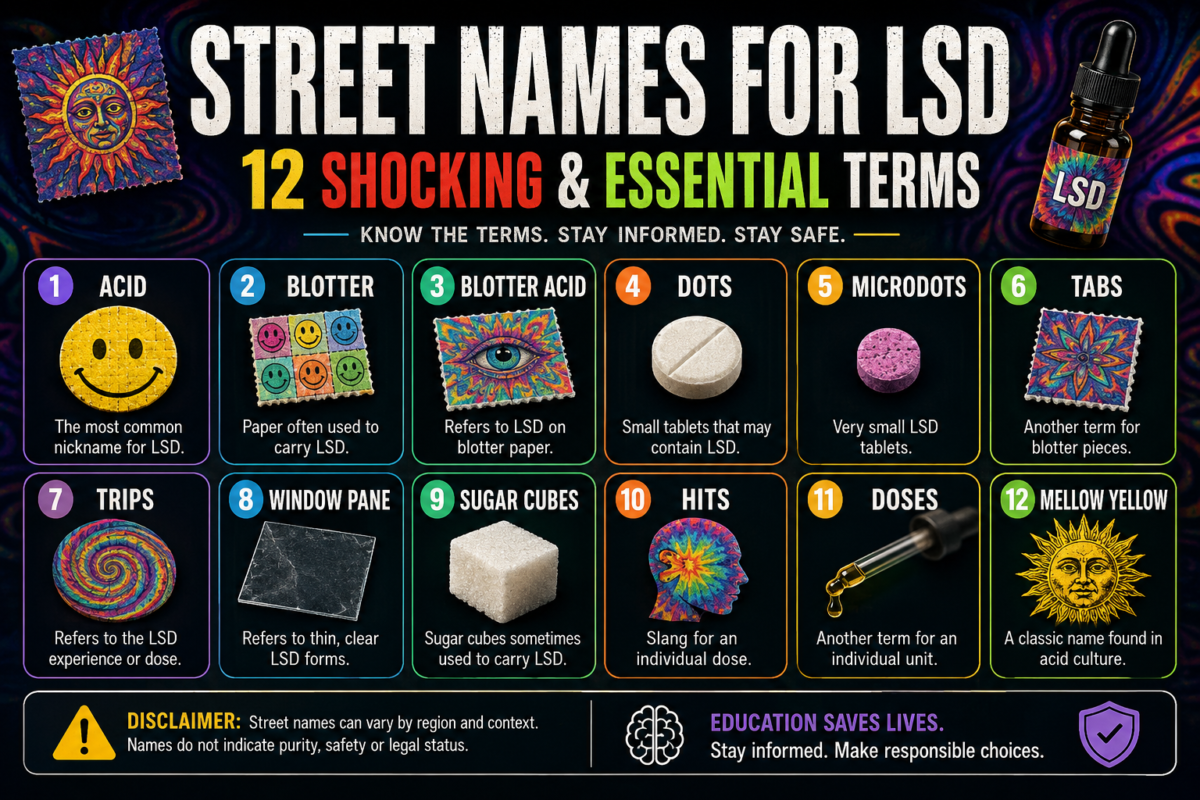
21
Jun
Jun
Street names for LSD have developed through decades of popular culture, regional slang, music and the different forms in which the substance has been described. “Acid” is the best-known term, but names such as blotter, tabs, dots, trips and window pane are also widely recognized. This guide explains where these expressions come from, what they usually mean and why slang cannot confirm the identity, purity or strength of any substance.
Table of Contents
- What Is LSD?
- 12 Common Street Names for LSD
- Why Is LSD Called Acid?
- How Forms Influence LSD Slang
- Why Street Names Change
- Can Slang Identify LSD?
- Effects and Safety Risks
- Legal Awareness
- Frequently Asked Questions
What Is LSD?
LSD stands for lysergic acid diethylamide. It is a powerful psychedelic substance associated with changes in perception, mood, thinking and a person’s sense of time. The National Institute on Drug Abuse refers to LSD as a psychedelic drug and notes that “acid” is a commonly used name for it.
The formal chemical name is very different from the everyday language people often use. That difference explains why street names for LSD appear frequently in public-health materials, news reports, historical discussions and conversations about drug awareness.
Readers who want more context can explore the history of LSD and our explanation of how LSD works in the brain.
12 Common Street Names for LSD
The following street names for LSD are among the terms most often documented in educational and drug-awareness resources. Their meanings may vary by place, generation and context.
1. Acid
Acid is the most familiar informal name for LSD. It comes from the word “acid” in lysergic acid diethylamide. Phrases such as “acid trip” and “dropping acid” developed from this shortened name.
2. Blotter
Blotter usually refers to absorbent paper divided into small sections. The paper may contain artwork, symbols or patterns. The word describes a reported presentation form, not a verified chemical identity.
3. Blotter Acid
Blotter acid combines the nickname “acid” with blotter paper. It is one of the common names for LSD connected directly to the form in which the substance has historically been distributed.
4. Dots
Dots is a slang term sometimes used for very small units or tablets. It is not a scientific measurement and does not communicate reliable information about contents or potency.
5. Microdots
Microdots are very small tablets historically associated with LSD. Colour-based descriptions such as “purple microdot” may refer only to appearance. Colour and shape cannot confirm what a tablet contains.
6. Tabs
Tabs commonly refers to individual pieces of blotter paper. People may use acid tabs, blotter tabs and LSD tabs as if they mean the same thing, even though none of these terms proves the contents.
7. Trips
Trips comes from the word “trip,” which is often used to describe a psychedelic experience. Depending on context, it may refer to LSD itself, a single unit or the experience associated with taking a psychedelic substance.
8. Window Pane
Window pane, sometimes written as windowpane, is a documented slang term associated with thin or transparent-looking forms. It may also appear as “window glass.”
9. Sugar Cubes
Sugar cubes became associated with LSD because liquid was historically reported to have been placed on absorbent sugar. This name describes a presentation method rather than confirming the presence of LSD.
10. Hits
Hits is a general slang term for individual units. It does not indicate a standard amount, and it should never be treated as a dependable measure of strength.
11. Doses
Doses is another broad term for individual units. Like many acid street names, it gives no dependable information about purity, quantity or chemical composition.
12. Mellow Yellow
Mellow Yellow is a name found in drug-awareness materials. Some lysergic acid diethylamide street names developed from colours, music, artwork and cultural references rather than from the chemical properties of LSD.
Why Is LSD Called Acid?
Among all street names for LSD, acid is the most recognizable. The explanation is simple: the complete name is lysergic acid diethylamide. Over time, “acid” became the shorter, easier term used in everyday speech.
The nickname does not mean LSD behaves like a typical corrosive acid, and it does not reveal anything about purity or strength. It is simply an informal abbreviation that became widely established.
How Physical Forms Influence Street Names for LSD
Many street names for LSD developed from the way the substance was represented or packaged. Blotter and tabs refer to paper; microdots and dots refer to tiny tablets; window pane refers to a thin or transparent appearance; and sugar cubes refer to sugar used as a carrier.
- Paper-related terms: blotter, blotter acid and tabs
- Tablet-related terms: dots and microdots
- Appearance-related terms: window pane and window glass
- Experience-related terms: trips
- Unit-related terms: hits and doses
Our guide to the different types and forms of LSD explains how these descriptions are commonly used. However, visual form alone cannot establish what a substance contains.
Why Do LSD Street Names Change?
Street names for LSD change because slang is shaped by location, culture, age group and time period. A term familiar in one country may be uncommon somewhere else, while a name popular decades ago may no longer be widely used.
New slang can develop from:
- Artwork or symbols printed on paper
- Colours and physical appearance
- Music and popular culture
- Regional expressions
- Historical personalities or events
- Attempts to disguise conversations
This constant change is why no list of common names for LSD can be treated as complete or permanent.
Can Street Names for LSD Identify a Substance?
No. Street names for LSD cannot verify chemical identity. A nickname, colour, logo, package design or seller’s description does not reveal whether something contains LSD, another substance or no active ingredient at all.
Slang also provides no reliable information about:
- Purity
- Potency
- Contamination
- Substitution with another substance
- Possible interactions
- Individual health risks
Two items using the same name may have different contents, while two items that look identical may not be chemically alike. For public-health discussions, it is more accurate to say a substance was “represented as LSD” unless its contents were professionally verified.
LSD Effects and Safety Risks
LSD can produce intense and unpredictable changes in perception, emotions and judgement. The experience can be influenced by surroundings, expectations, mental state, health history and other substances taken at the same time.
Possible effects include visual distortions, altered time perception, intense emotions, confusion, fear, panic and impaired decision-making. Read our detailed overview of the effects of LSD and the guide explaining how long LSD may last.
The variety of street names for LSD can create a false sense that different labels represent predictable products. They do not. Anyone experiencing seizures, chest pain, loss of consciousness, severe agitation or dangerous behaviour requires urgent medical assistance. Our article Is LSD Safe? covers additional health considerations.
LSD and Legal Awareness
LSD is controlled or prohibited in many countries, and the rules differ by jurisdiction. Slang does not change the legal classification of a substance. Anyone researching acid street names should consult current government information for their own location rather than relying on informal websites or social-media claims.
Our educational overview of the legal status of LSD provides general background, but it is not a substitute for professional legal advice.
For authoritative information, readers can review the DEA LSD fact sheet and the National Institute on Drug Abuse overview of psychedelic and dissociative drugs.
Frequently Asked Questions
What is the most common street name for LSD?
Acid is the most widely recognized name. Other common terms include blotter, tabs, dots, microdots, trips and window pane.
Why is LSD called blotter?
Blotter refers to absorbent paper historically associated with LSD. The term may describe the paper or be used informally for the substance represented as being on it.
Are acid tabs and LSD tabs the same thing?
The terms are often used interchangeably for pieces of blotter paper. Neither phrase confirms the actual contents, purity or strength.
What does microdot mean?
A microdot is a very small tablet historically associated with LSD. Its appearance cannot establish what substance is present.
What does window pane mean?
Window pane is slang associated with thin or transparent-looking forms. It is sometimes also called window glass.
Are street names for LSD the same in every country?
No. Slang varies by region, culture and generation. The same expression may have a different meaning in another place or context.
Can appearance identify LSD?
No. Colour, artwork, shape, packaging and slang cannot reliably establish chemical identity or potency.
Final Thoughts
Street names for LSD include acid, blotter, dots, microdots, tabs, trips, window pane, hits, doses and Mellow Yellow. These terms developed from chemical language, physical forms, culture and historical use.
Understanding lysergic acid diethylamide street names can support education, research and public awareness. However, slang is inconsistent and should never be treated as proof of identity, strength, purity or safety.
This article is provided for education and public awareness. It does not encourage the possession, purchase, manufacture or use of controlled substances.
